

This is JOIN 101’s seventh installment of “What are you doing alone that you could be doing together?” — a series highlighting civic innovators we’ve encountered on JOIN OR DIE’s community screening tour who have asked themselves this pivotal question…and put their answers into action.
This week, Rob Reider shares about the founding and work of the SAD DADS CLUB, a group that helps grieving fathers find a community with which to navigate life after loss.
You can listen to Rob’s story above and find the full transcript and helpful resources below.
Onward to the next American joining revolution,
Rebecca Davis and Pete Davis
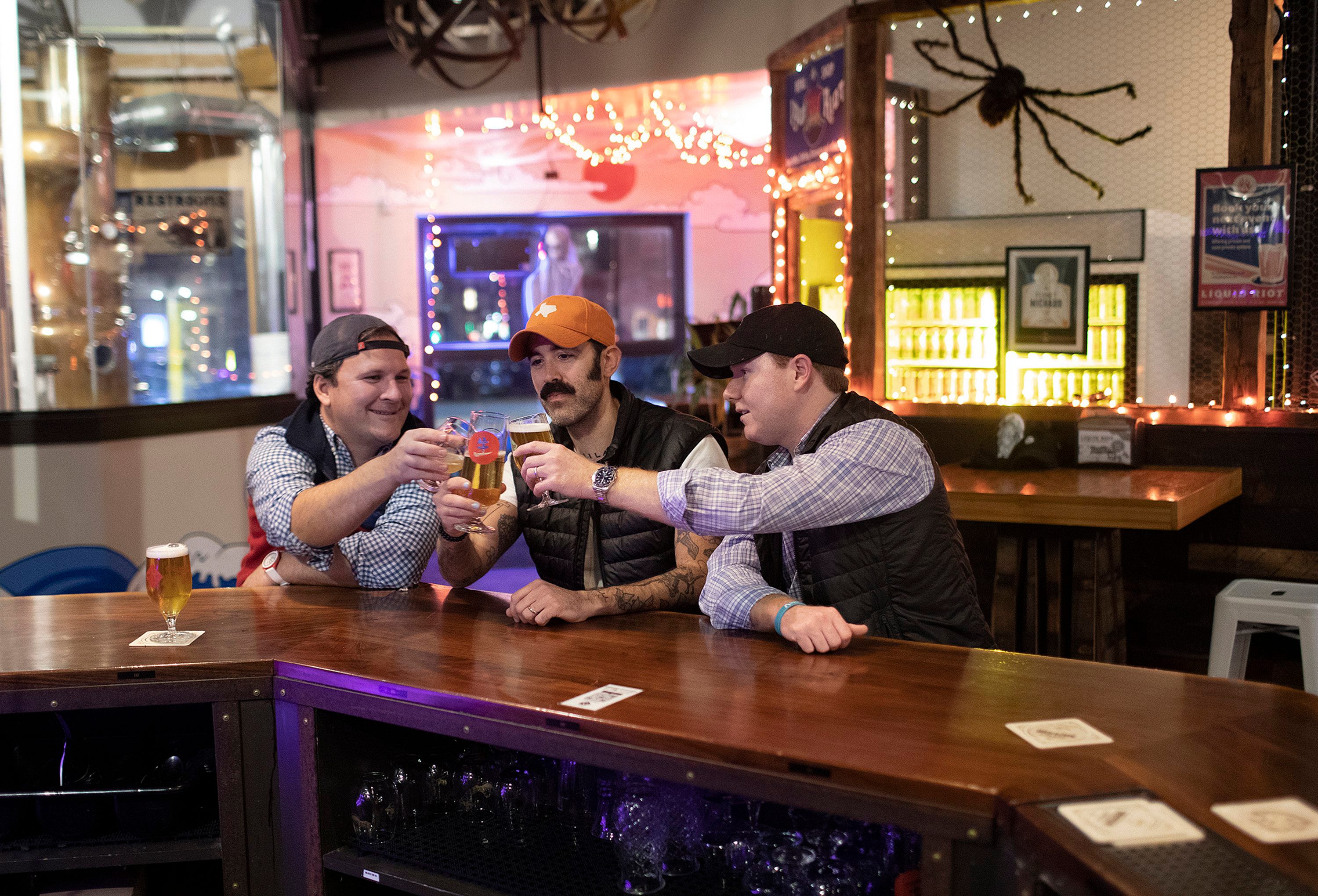
Rebecca: Today we meet Rob Reider, who found community during a very difficult time.
Rob: My wife and I were living in Portland, Maine, when our daughter was stillborn at 38 weeks. I was in the darkest, most hopeless point in my life. I was dealing with the most traumatic loss that I had ever endured, and I was also met simultaneously with the most life-saving support from a peer who had gone through something just as tragic. He and I both lost our daughters.
We were best friends in college, and this was ten years after we graduated. He and I both, in the same calendar year, 2017 — eleven months apart. He was in January, I was in December. So I was one of the first ones to hear when he lost his daughter Bella in January. And being in close proximity — we were both living in Portland — I was seeing him as much as I could.
At that point, I hadn’t gone through losing Lila. But as a best friend and as someone close emotionally and proximity-wise, I was there for him as much as I could be, even though I didn’t intimately understand what it was he was going through. I watched how difficult it was for him and for his family.
As I always put it, I had a net to catch me when I experienced my loss. I had the fortunate misfortune of having someone in my life who had gone through what so many people refer to as unimaginable.
We were shortly after introduced to another father named Chris, who had also had a stillborn daughter at 38 weeks. And Chris, Jay, and I started spending a lot of time together. And those moments that we were able to be together were so reassuring and so comforting — but it was also reassuring and comforting in the moments that we were not together, because we knew that we had one another. And in this profound darkness, we also had so much love and hope knowing that we were not the only ones.
Pete: Soon after, Rob, Chris, and Jay decided they should open up their trio to others.
Rob: We realized that there are probably guys out there who don’t have anyone in their community who has ever been through something like this. So we need to make sure that they know they’re not the only ones going through it.
And so we started an Instagram account. We started a website where the three of us put up our birth stories to try and encourage other dads to share — something that we could just always have living on this website, so that any dad who goes through the unfortunate circumstance of losing a child can reference it, and in their own time and their own comfort level go through it and just get that same reassurance of: “This isn’t only happening to me.”
Isolation and grief is very dangerous, and that’s what we wanted to eliminate. And I think organically, from those conversations, it evolved.
Interestingly — as we talk about the origin of the name — the first time that Chris, Jay, and I were going to hang out together, it was this just gnarly, rainy, cold, kind of winter-ish night in Maine. And I mentioned to my wife that we were going to all hang out together, and she looks out the window and said, “Ugh, what a terrible night. You guys are just gonna be sitting in the dark drinking beers like the Sad Dads Club.” I was like, “What did you say? What was that?”
And it just stuck with me. It’s catchy, and it’s something that whenever people see it — without fail, if I go out in something that says Sad Dads Club, which I do every single day — people will be like, “What is Sad Dads Club?” Because it’s just so evoking. It’s like, what does that mean? It’s kind of funny.
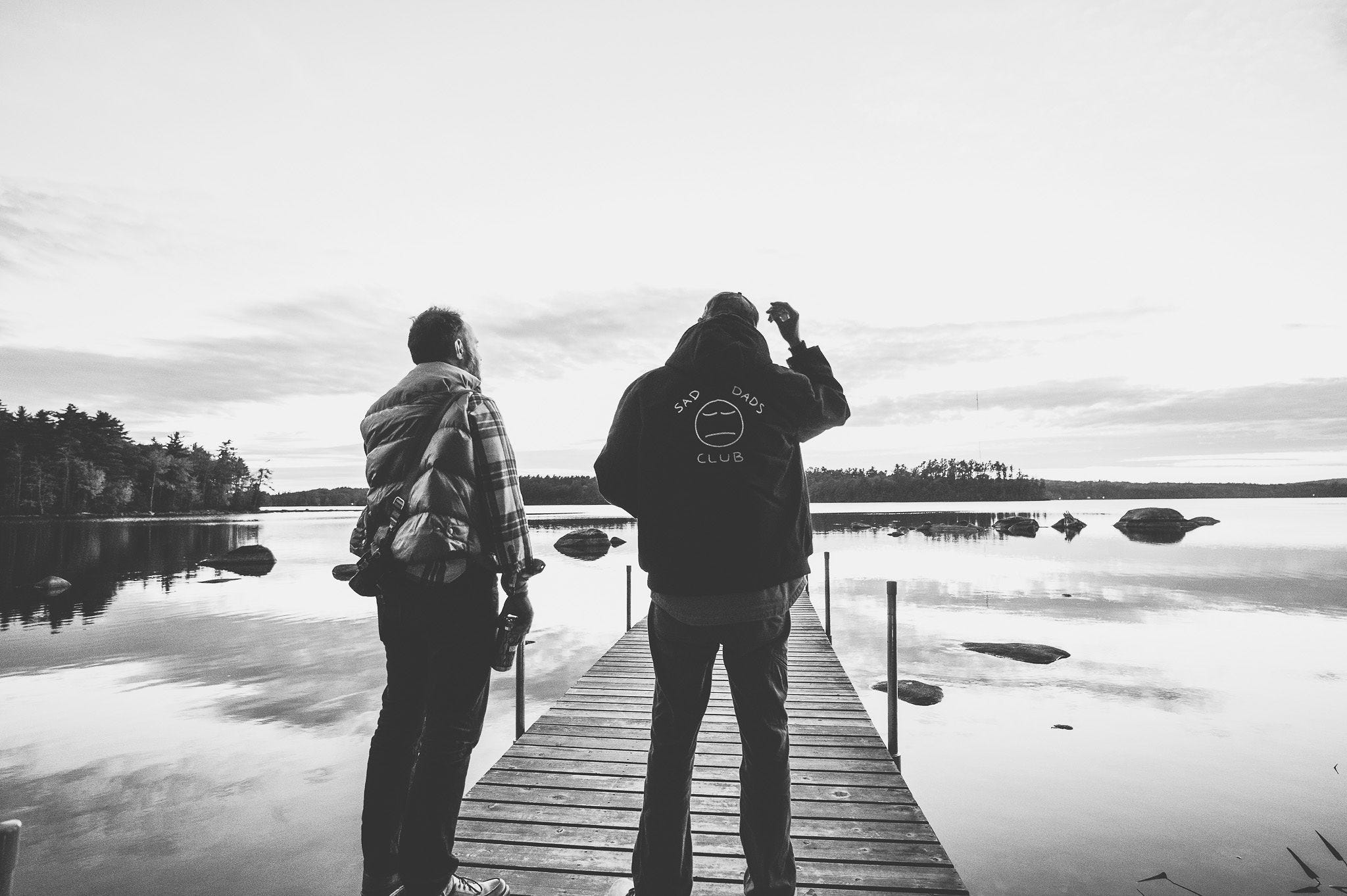
I know people have no idea what it is when they ask, because when we tell them, they’re like, “Oh, my goodness.” But we say: I know that sounds really sad, and the circumstance under which these dads are coming together is sad. But it brings so much joy and hope back into the lives of dads who so desperately need it. So it’s actually a really happy and joyous space.
Pete: And that was their goal for the Sad Dads Club: to hold space for both grief and joy.
Rob: As we always say, this is a space that we take very seriously. It’s a space that we think is sacred. But that doesn’t mean that it’s not gonna also be a fun space, and one where we laugh, and one where we make light of things. We don’t make light of the fact that our children passed away — but we give each other permission to just engage in life that way again.
And what we found, and I remember feeling myself — the first time that I smiled or laughed or felt this surge of joy after losing Lila — I sort of was like, “Don’t do that. Don’t do that, because you’re supposed to be sad. That is your connection to your daughter — this sadness — because that’s the strongest feeling that you have.” And a lot of dads come in thinking, “I have to stay sad, because that is a measure of my love for my child that I lost.”
But what we are here to explain to people — or encourage them to do — is to get back into those parts of life that bring you joy, and find a way to connect with your child that way. We laugh together about silly, stupid things. We cry together about very serious, traumatic things. And then there’s everything in between.
Pete: The Sad Dads Club started with a single Zoom call.
Rob: The first Zoom that we had was actually due to a partnership — and inspired by another nonprofit called SAILS, which is an acronym for Stillbirth and Infant Loss Support. They hosted a one-off called Lost Dads Open Hour, and it was facilitated by three fathers: one of whom had lost an eight-month-old daughter, and another of whom had had recurring miscarriages, and another had a stillborn child.
We received an Instagram message from that organization like a month or two after we had launched, and I signed on to the Zoom. And I was like, “This is exactly the kind of thing that we wanna do.” SAILS mainly deals with supporting women — they were with the birthing parent — and they were just doing this one-off for dads. And at the end of the Zoom, a lot of the dads were like, “When’s the next one? When’s the next one?” And they’re like, “Oh, well, we don’t really have anything planned. We just wanted to gauge demand.”
Right after the Zoom, I messaged back to Sadija, who is the founder of SAILS, and said: “Hey, this is exactly what Sad Dads Club is looking to do. We don’t even have a Zoom account yet. Let’s partner on this. If we can use your Zoom account, you and I can talk about what the structure looks like. I will guarantee that someone from our organization will be there.”
So we were just kind of building the ship as we pushed it in the water. And luckily, we had a lot of dads early on who were very talkative and open, so I didn’t really have to do too much outside of opening the room, starting the conversation, giving some words of encouragement and support where and when necessary and appropriate — and just let that ship sail.
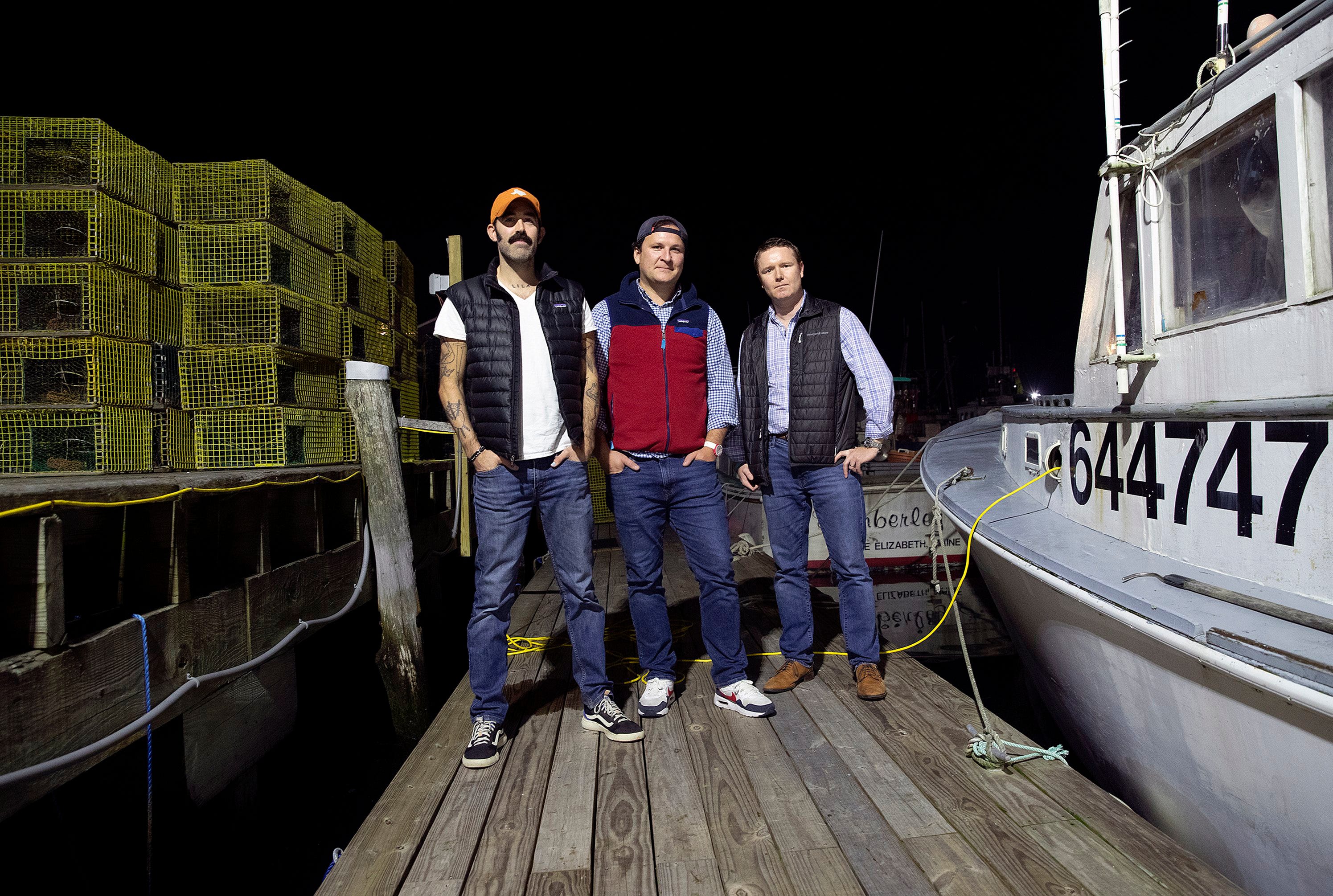
Rebecca: And they kept sailing.
Rob: It started with monthly Zooms, then it went to twice a month, and then we went to weekly. So weekly, we currently offer a large group Zoom — we do it every Thursday at 8:30 Eastern — but the theme alternates.
On one Thursday, we’ll have what’s called Sad Dads Open Hour, where we pick a topic — a suggested topic. (We always say we can be nimble, and if there’s something on someone’s heart and mind, this space belongs to all of us, and we can go over whatever it is you’re feeling that you wanna get out there.)
And then on alternating Thursdays, we do what’s called “My Child, My Story” — which was formalized as a result of there being more and more dads who were coming to Sad Dads Open Hour and starting to share these intimate details about their loss, and then suddenly freezing, looking at all the raised hands in the Zoom and saying, “I’m so sorry. I’m talking too much. Let me hand it to the next person.” So My Child, My Story is an opportunity where a dad can opt in, and they can tell front-to-back the story of their child and their loss in long form, in whatever degree of detail they feel comfortable.
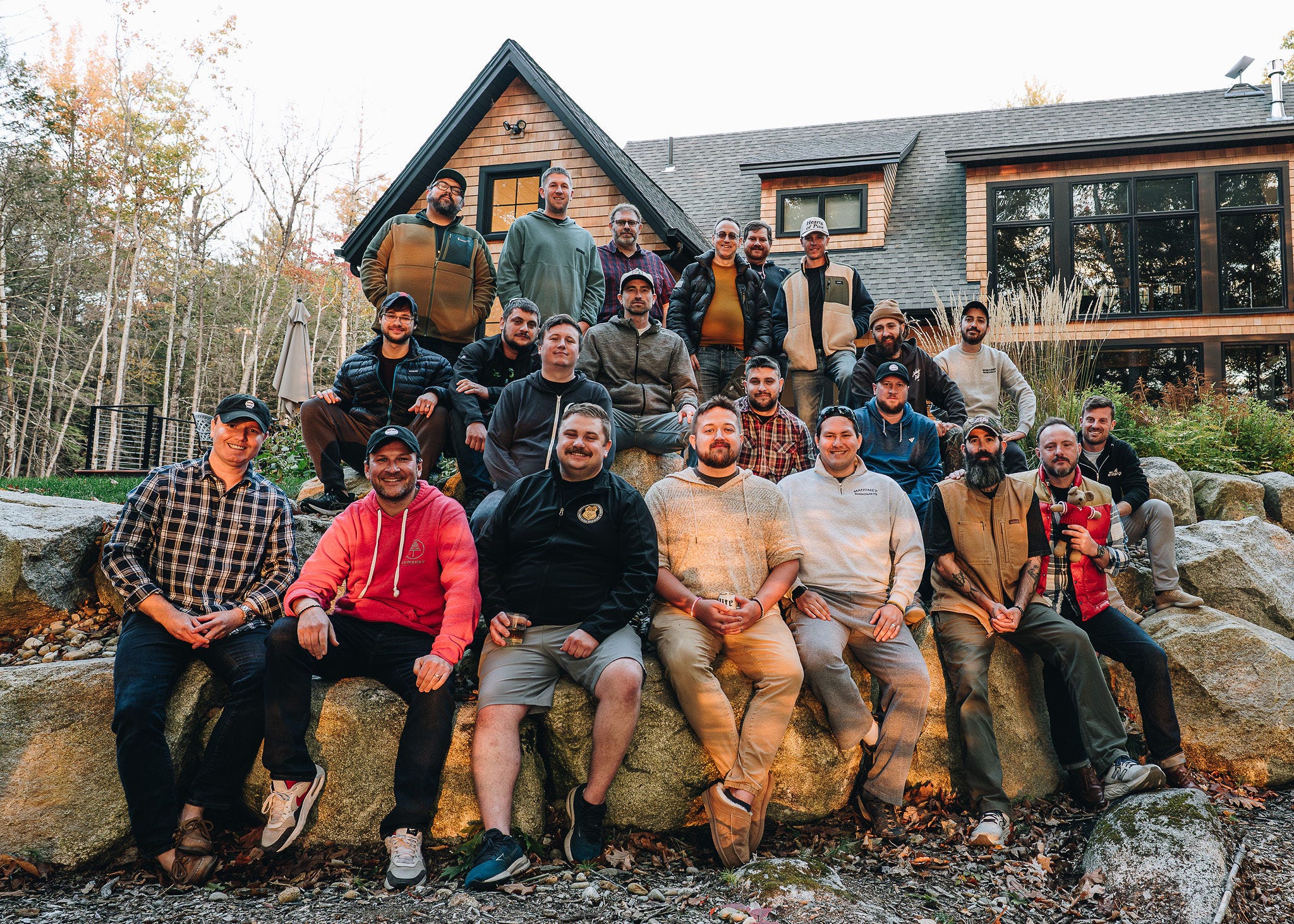
So that’s kind of what our weekly larger-group virtual programming is. We also have a private channel on the Discord app, where we have dads literally all over the world. We also do in-person events that are regional — those happen throughout the year all over the country. And then we’ve been doing retreats twice a year, which we’re going to move next year to three times a year.
And that’s all of our non-clinical offering. That is what we do to facilitate space for fathers who are grieving the loss of a child and who are needing connection to know that they’re not the only ones going through it.
Outside of that, we also have a clinical support side, where we partner with therapists who specialize in child loss and grief, and we pay for up to six sessions per dad — because we want to remove not only the financial barrier, but also the logistical barrier, to getting quality professional mental health care.
Rebecca: Rob sees virtual connection as a bridge to in-person connection.
Rob: What I’ve seen is that the virtual component leads to greater comfort in engaging in person — which then makes the in-person experience even more transformational.
I am a total in-person advocate. But I also think that that’s just not everyone’s comfort level — especially with something as delicate as grief. There are some dads who will log on to our Zooms who have their cameras off at all times. And we always say, “Come as you are and engage however you feel comfortable.” And that isn’t even always necessarily the same week to week. It’s not the same moment to moment.
But if we’re facilitating this bridge to hopefully get people to be able to meet in person, I have found that introducing people virtually makes them far more comfortable, receptive — and the experience becomes even stronger when they do get in person. The anecdotes and the testimonials that I’ve gotten from dads who have attended our retreats are mind-blowing, and they are exactly what we’re hoping the experience is going to be. But a lot of these dads — I remember seeing them log on to our Zooms, and they were camera off, not sharing.
Virtual, we can reach dads everywhere — and we can let them get to know one another at their own pace by having a private channel on the Discord app. There are literally dads in touch with one another all over the world, 24/7. That is so important when you’re gathering people for something as delicate and as sensitive and traumatic as grief.
So these dads are now coming into our physical spaces ready to engage with one another at that level of intimacy. It’s an intimate experience to share a weekend with someone in the same place — and you know why you’re there. But luckily, you’ve gotten to know each other, so you feel more comfortable in doing that.
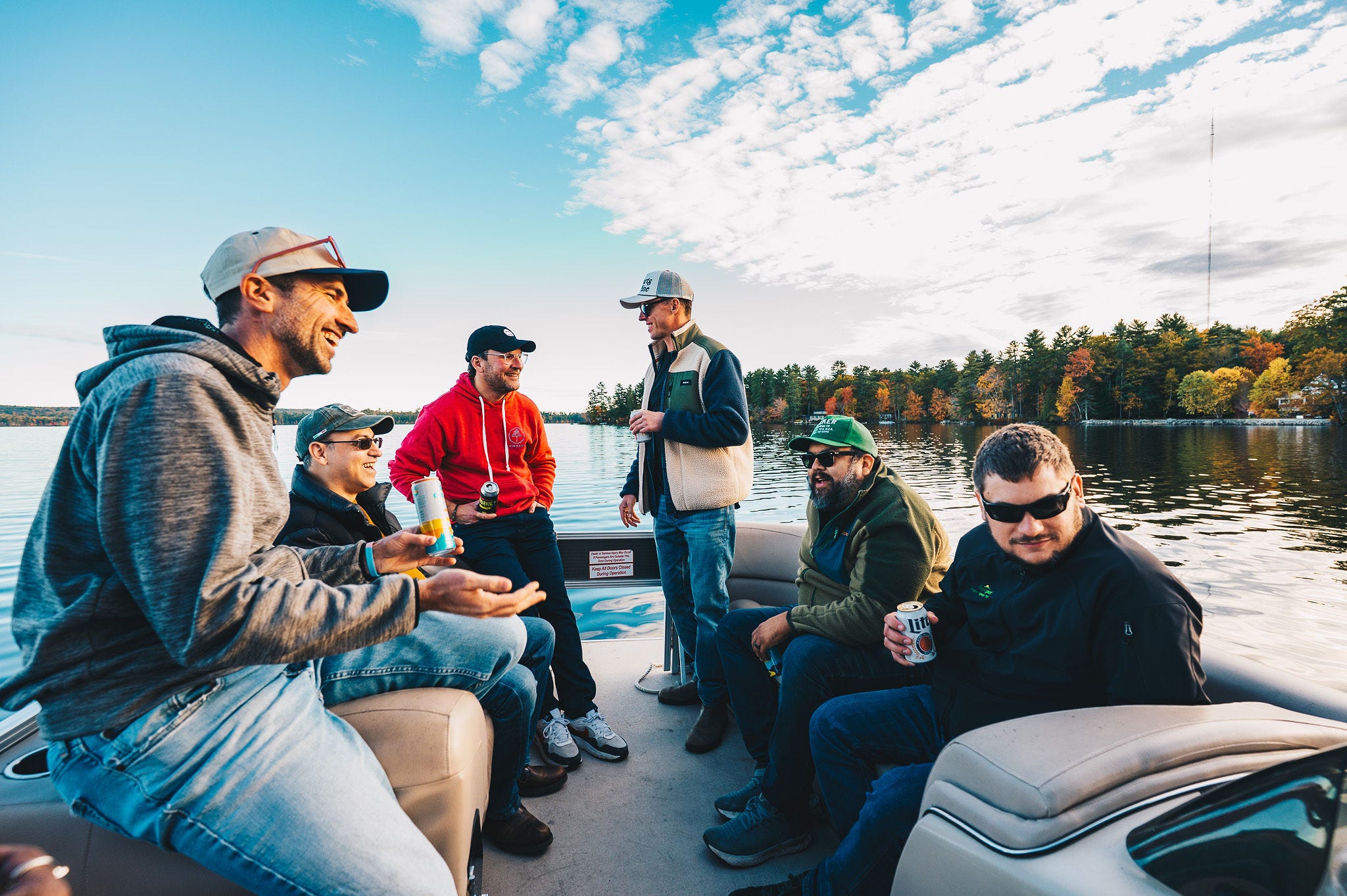
Rebecca: In building community around such a tender topic, Rob anchors the group to two core commitments.
Rob: First and foremost — which is something that we agreed on — is that if we’re gonna do this, we’re gonna be consistent. There’s gonna be no, “Hey, we don’t really feel like showing up tonight.” There has to be somebody there to open the room. Because even in those moments where someone didn’t come, they knew that it was happening — so they have a reassurance of, “Okay, I didn’t feel ready to go to the Zoom meeting, but it’s gonna happen again next week.” And there cannot be any question there. Consistency, I think, is the most important thing.
Followed by then trusting that your community is a space where everyone has something of value to offer. It is where anybody can have an idea or have a nugget of wisdom that is gonna change entirely the way that other dads think about certain components of their grief. So everybody’s worth is the same. We are all equal. And having grown up with a Quaker education, I think a lot of that was imparted on me — being this believer that the power of community is boundless.
What we are and what we do — and the power of it, and what brings people out of themselves and willing to be vulnerable — is that everyone is showing up for one another. It’s not one person getting anybody to show up. It’s all of us showing up, and that inspires people to continue showing up.
Because when dads walk through, say, the proverbial doors of a Zoom session, and they are met with love, warmth, and support by everyone in there — that dad who is new, months down the road, is going to keep coming, because they want to be that same source of support for the new dad who was in the position that they were once in themselves.
Because something like grief is lifelong, this is a space that we know we need to nurture not only for ourselves, but for the people that we haven’t met yet — who haven’t even endured their tragedy or their loss.
There are dads who are 50 years removed from their grief — and it’s not because they haven’t processed. They always do reference, “I wish this were around when I was younger and when I was first going through it.” But they’ve gleaned a lot over those years, and they are able to be there to offer some words of encouragement, some words of wisdom, because they’ve been living with it for longer.
And these dads who are newer to processing this loss, and to navigating their journey with grief, often say how appreciative they are to see these dads who are still there — still talking about their child, still saying that child’s name. It lets them know: Yes, it’s gonna be something I deal with the rest of my life. But I will live with this — because Dave and Rudy, they are right there, decades removed from their loss.
Pete: That’s the power of the Sad Dads Club: Its members are going on a journey that is so particular, it can be isolating — but the club helps them walk their particular journey together.
Rob: Nobody presumes, based on the loss and the story that they themselves have endured, that they understand anyone else’s grief. But they understand that everybody needs a place to go to feel supported, where we can invite vulnerability, and where that vulnerability will be validated.
My experience with child loss is having had a stillborn daughter. I don’t presume to understand the complexities of losing a child who was even born alive, went to the NICU, and never made it home — or a young child, or even an older adult child. I don’t presume to know that experience. But I do know that I and the rest of the dads in Sad Dads Club are grieving, and that’s where the overlap in our connection is really strong. It’s how grief is affecting our life.
So while we do have dads who have experienced a myriad of losses, circumstance of loss and age are not a barrier to connection. And I would just encourage that any dad out there who might be struggling with that grief of child loss: consider coming to a meeting.
💡 Learn more
⇛ Read more about the SAD DADS CLUB here
⇛ Follow SAD DADS CLUB on Instagram here
⇛ Find out about upcoming meetings of the SAD DADS CLUB here
💻 We’re joining gathering expert Priya Parker on Group Life for a Substack Live chat this Thursday, July 16th at 12PM ET. Hope to see you there!

🍿 Bring JOIN OR DIE to your community
Want to host a JOIN OR DIE screening with your community? Let us know using the button below and we’ll get in touch with more information about how to host:
Or join for an upcoming Zoom info session:
Wednesday, July 15th from 8PM ET to 8:30PM ET — Zoom Presentation on Community Screenings with Director Rebecca Davis
Wednesday, July 22nd from 8PM ET to 8:30PM ET — Zoom Presentation on Community Screenings with Director Rebecca Davis
📣 Spread the message
Know someone who’d be moved to action by Rob’s story?
Inspired by someone who you think we should feature in a future WAYDATYCBDT who chose to do something that they could have done alone…together? Comment below!


