
This is JOIN 101’s third installment of “What are you doing alone that you could be doing together?” — a series highlighting civic innovators we’ve encountered on JOIN OR DIE’s community screening tour who have asked themselves this pivotal question…and put their answers into action.
This week, David Osorio shares his journey of building CrossFit South Brooklyn from a small group working out in a park into an 800-member community hub that hosts fun events, sprouts subgroups, and has raised over half a million dollars for neighborhood causes.
You can listen to David’s story above and find the full transcript and helpful resources below. If you or someone you know is ready to follow CrossFit South Brooklyn’s example of building community while building muscle — share this story…and let us know what you create!
Onward to the next American joining revolution,
Rebecca Davis and Pete Davis
Rebecca: Today we meet David Osorio, who has always been inviting people to work out with him.
David: So when I was growing up, I didn’t play a lot of team sports. I played a little bit of ice hockey and roller hockey and stuff like that—not very well. But I was always sort of intimidated by team sports. It’s not something that I naturally gravitated towards.
And then when I got into high school, I wanted to start getting in shape. I wanted to start working out. I didn’t really know where to start. So I’d start going to the weight room in my high school. And basically a lot of the teams would be working out and I would just kind of like mirror what they were doing in the corner and try to figure it out on my own.
I just really enjoyed it off the bat. I started to see some changes in my body and just felt better about myself. And then pretty shortly thereafter I started trying to bring my friends into the gym. A lot of my friends were the music kids, the art kids, etc. who weren’t working out as much. So really from the outset I was like: I want to share this with other people and I want this to be more of a communal experience.
So in high school, my junior year, I made this decision. I was like: I’m gonna start a gym one day.
Pete: But David didn’t want his gym to be one of those where everyone was together…working out alone.
David: That kind of standard commercial gym model where everyone just comes in, does their own thing, they’re on machines, headphones in, and they go home—I knew that wasn’t it.
And then I was introduced to CrossFit in late 2003 and I absolutely fell in love with the methodology. One of the things that attracted me to it was that in the early days — and this was prior to YouTube — they would post videos of people doing their workouts. It was a handful of people throwing down in the garage. It had this cool element that I had never seen in fitness before, where it almost reminded me of skate videos growing up. It had that DIY aesthetic to it. Like: Hey, we’re out here, we’re just doing this thing. We’re putting it out to the world. It’s us and our friends throwing down.
So in the beginning, I had no money. I was in New York City, I wasn’t about to take a lease or a loan out on a giant facility. So I just thought: Let me just start this thing in a park.
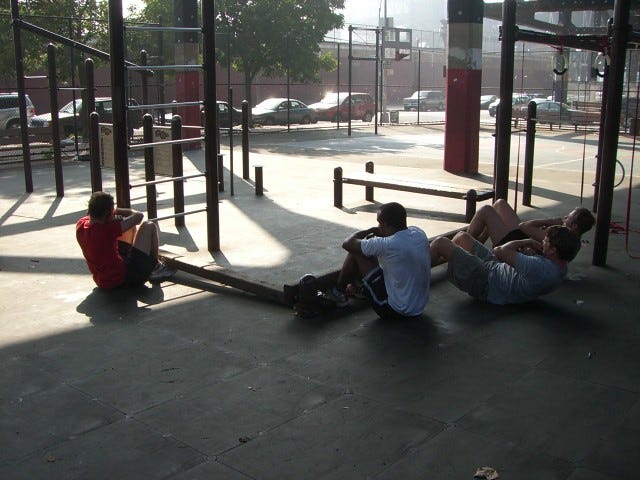
My worst case scenario in the beginning was just that I sit alone in the park for half an hour and then I walk home. And it was that quite a few times in the beginning. But the cost was so low for me that I was like: You know what? I’m gonna keep showing up. And a lot of it too was just trying to do something every day. So for the first many years, it was: Every day, what can I do? Can I try to go to Lowe’s and make a piece of equipment? Can I learn something new or put something out there?
So one day I got a call. A guy — he was a military guy — said: “Hey, I’m back from deployment and we were doing CrossFit overseas, so I want to continue that here.” So he showed up and it was just him. And again I was just like: Alright, it’s you and me, let’s do this.
And I went from one person to two people, three people. And I remember thinking, when it was like six or seven people, I was like: This thing is huge — I’m blowing up!
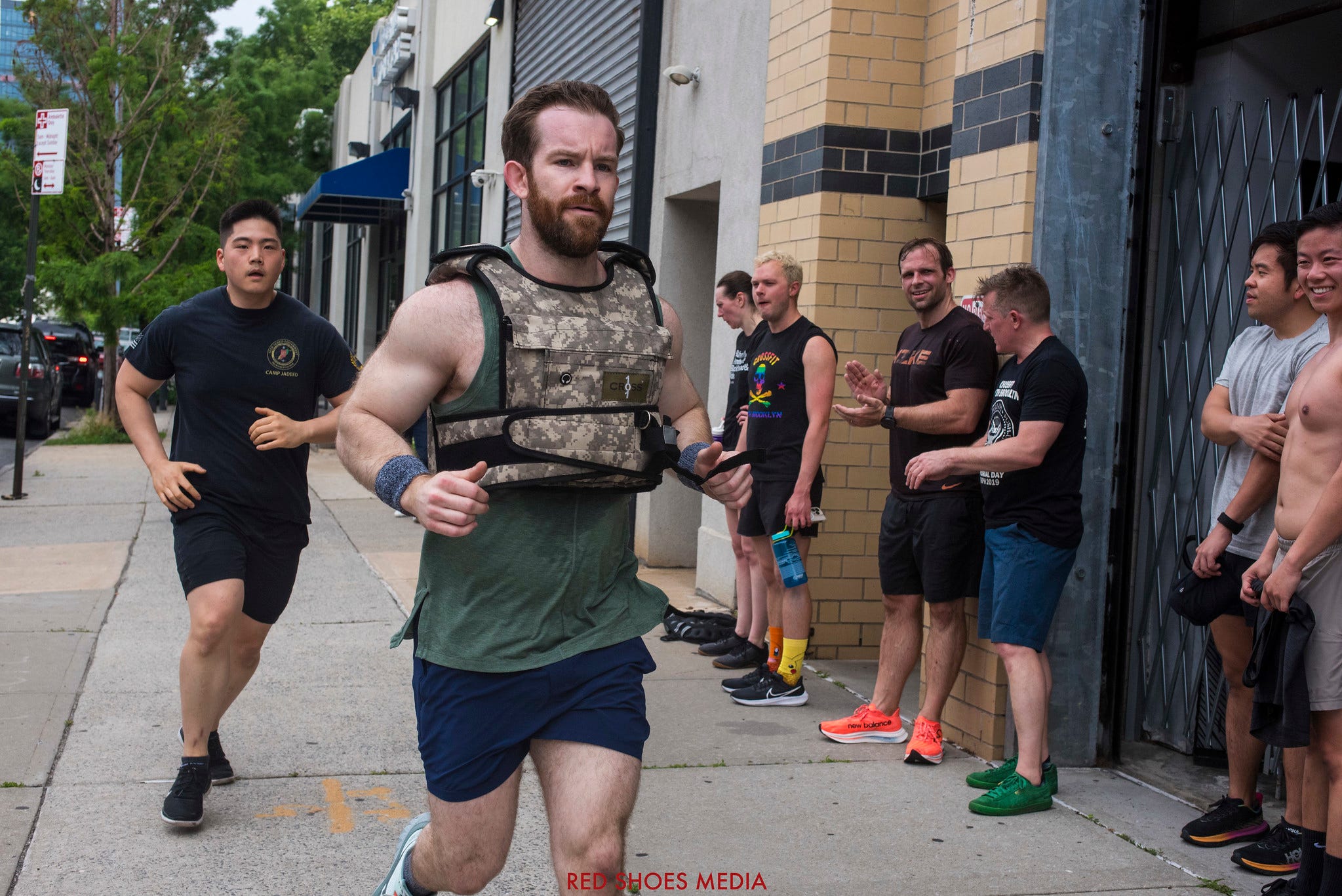
There was a lot of camaraderie. After the park, I was in a place called the Brooklyn Lyceum — I would rent by the hour there. We had one or two classes on the weekend. And then gradually I would increase classes as the membership grew, as the demand grew. And then around 2010, I was able to finally lease our own proper space.
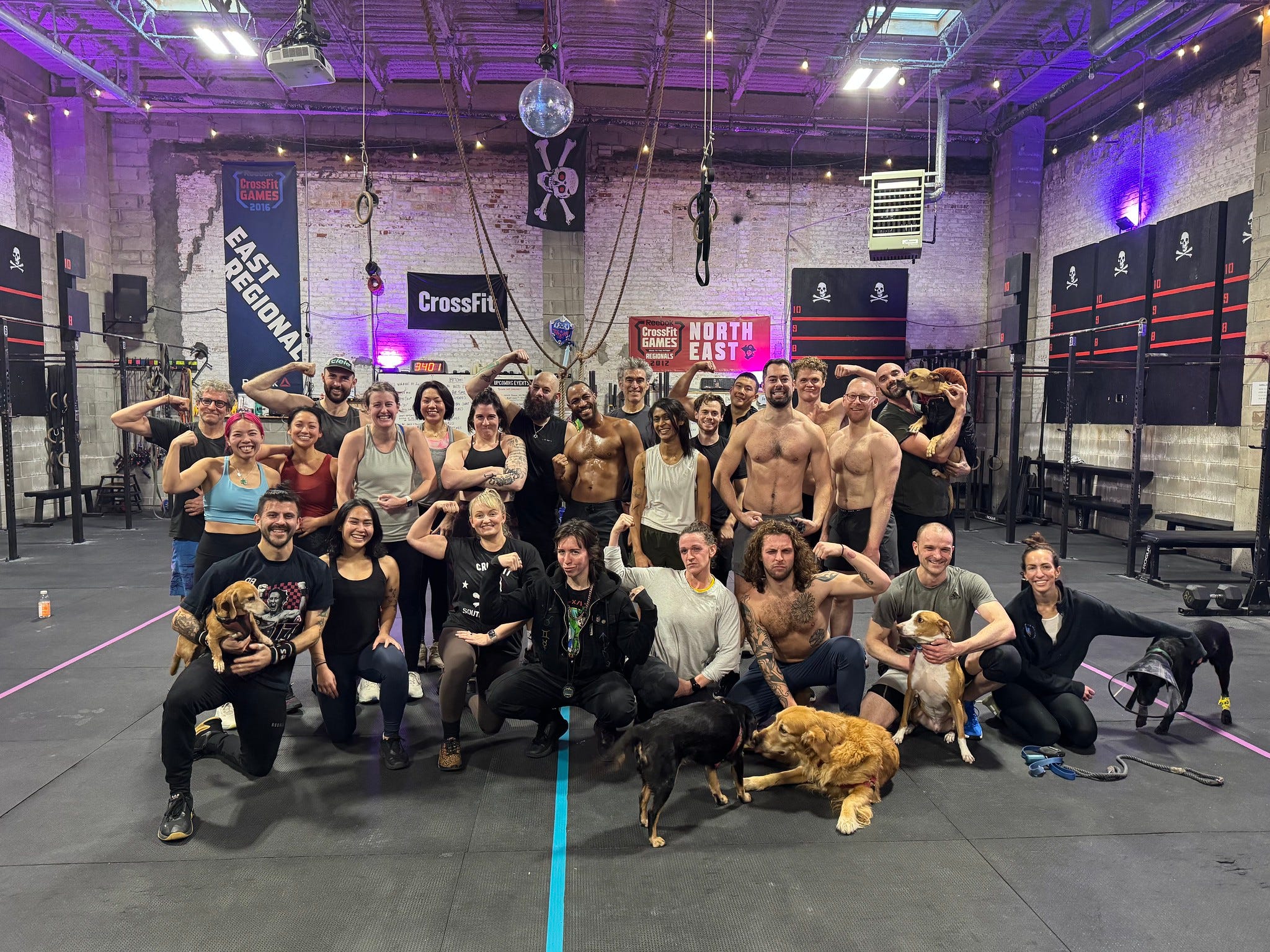
And now we are 800 members, 11,800 square feet, coming up on 18 years now. Bootstrapped from the beginning: No investors, no loans, no debt, no partners — just get $20 per person as they show up, and just constantly reinvest it. And more than anything else, just focus on the quality of the experience. I get those people for one hour and I’m gonna try to make it the best hour of their day through fitness and community and fun.
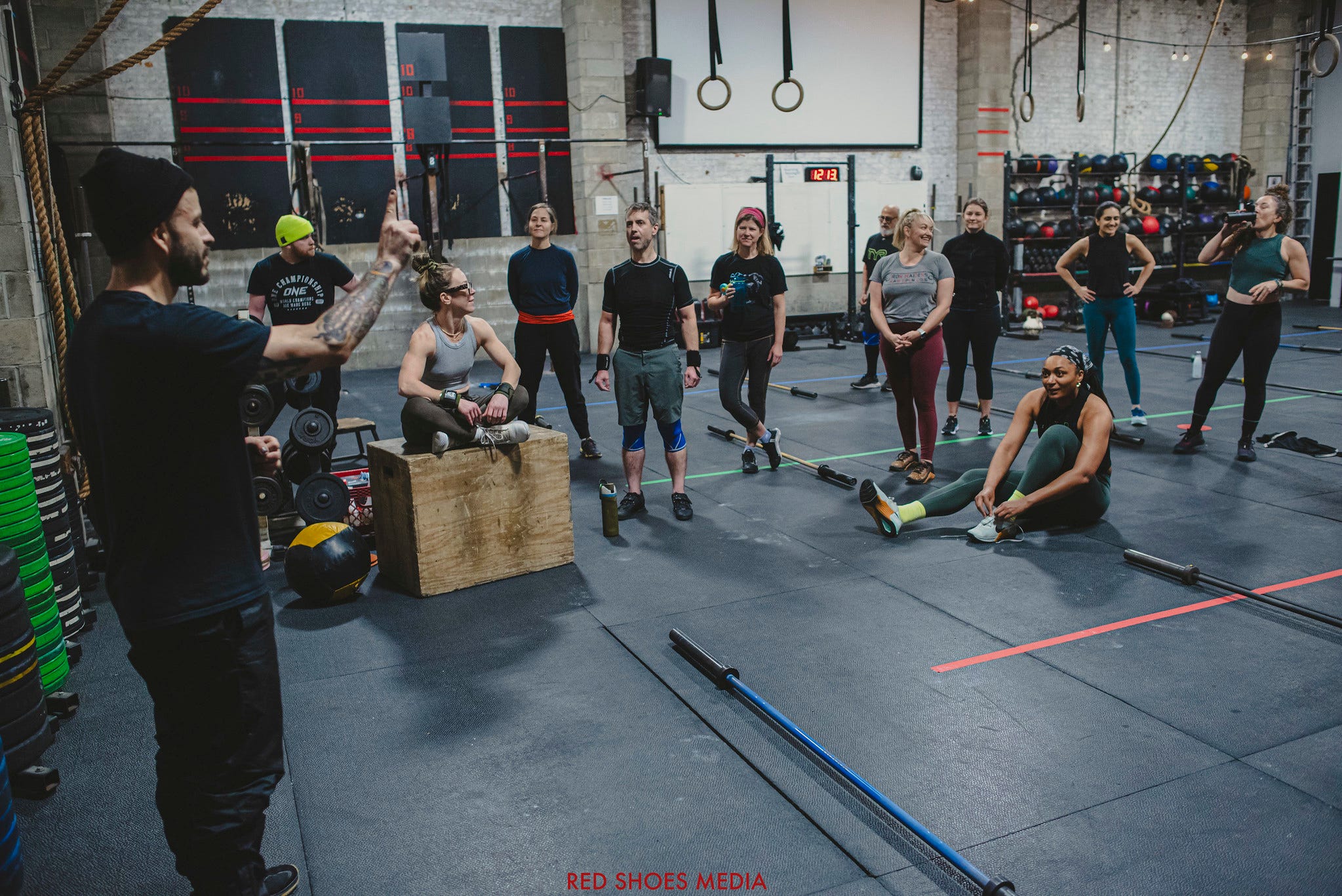
Rebecca: CrossFit South Brooklyn has all the things you’d expect at most gyms.
David: We have group classes, we have open gym, we have personal training, we have some barbell clubs.
Rebecca: But the gym’s greatest amenity? It’s other people.
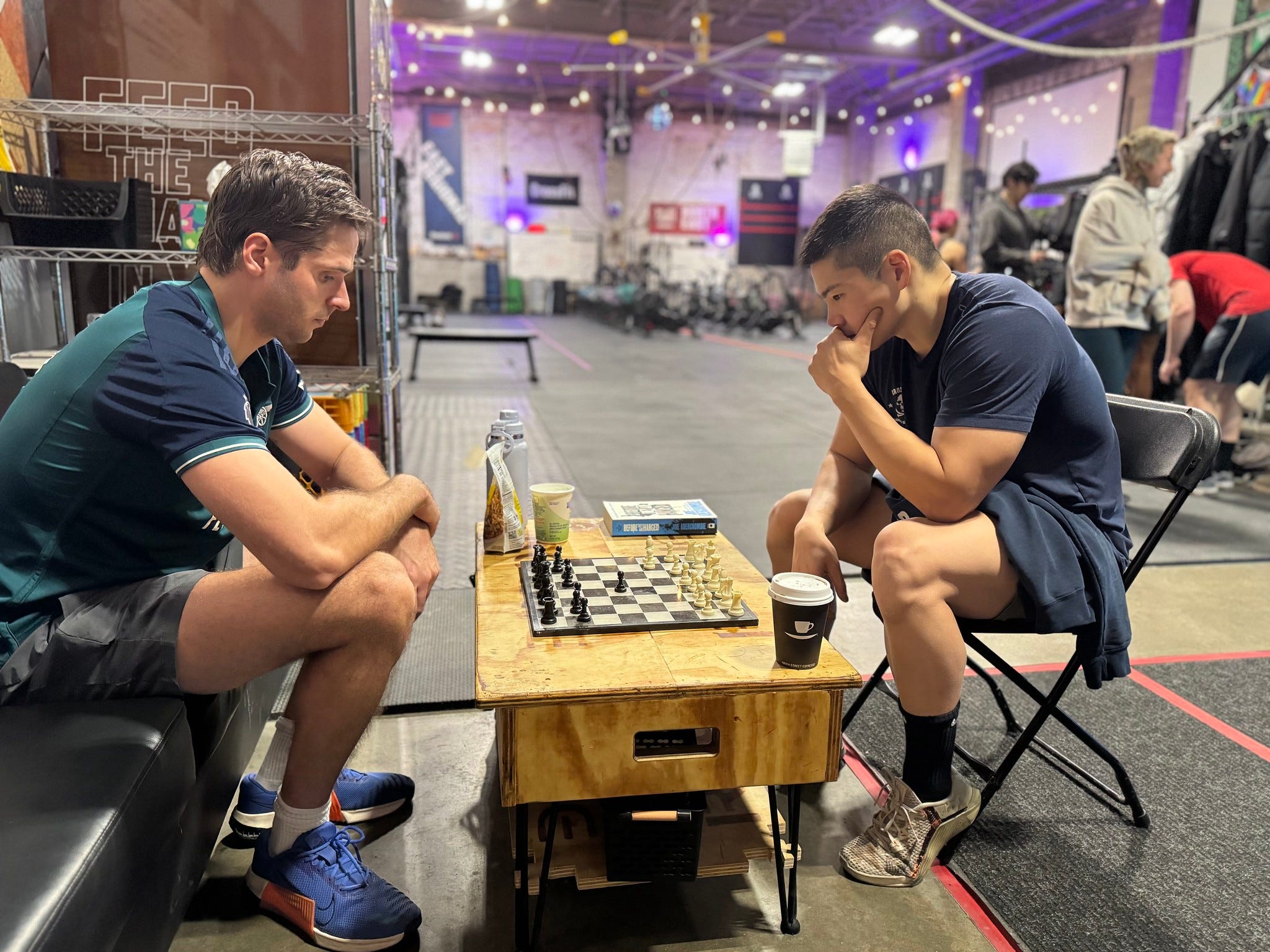
David: One of the things that I’ve heard so many times is that there are people that I never, in a million years, would have met — all these people who are well beyond your social circle come together. You’re all just wearing gym shorts and t-shirts.
And then you have this shared suffering. So it’s this combination of suffering and laughter. If you can get those two things — suffering in a safe space, and then also laughter and community. You go through something with somebody else for that hour, and then automatically it’s a great equalizer. Because everybody in that room, regardless of their background: A pull-up is a pull-up.
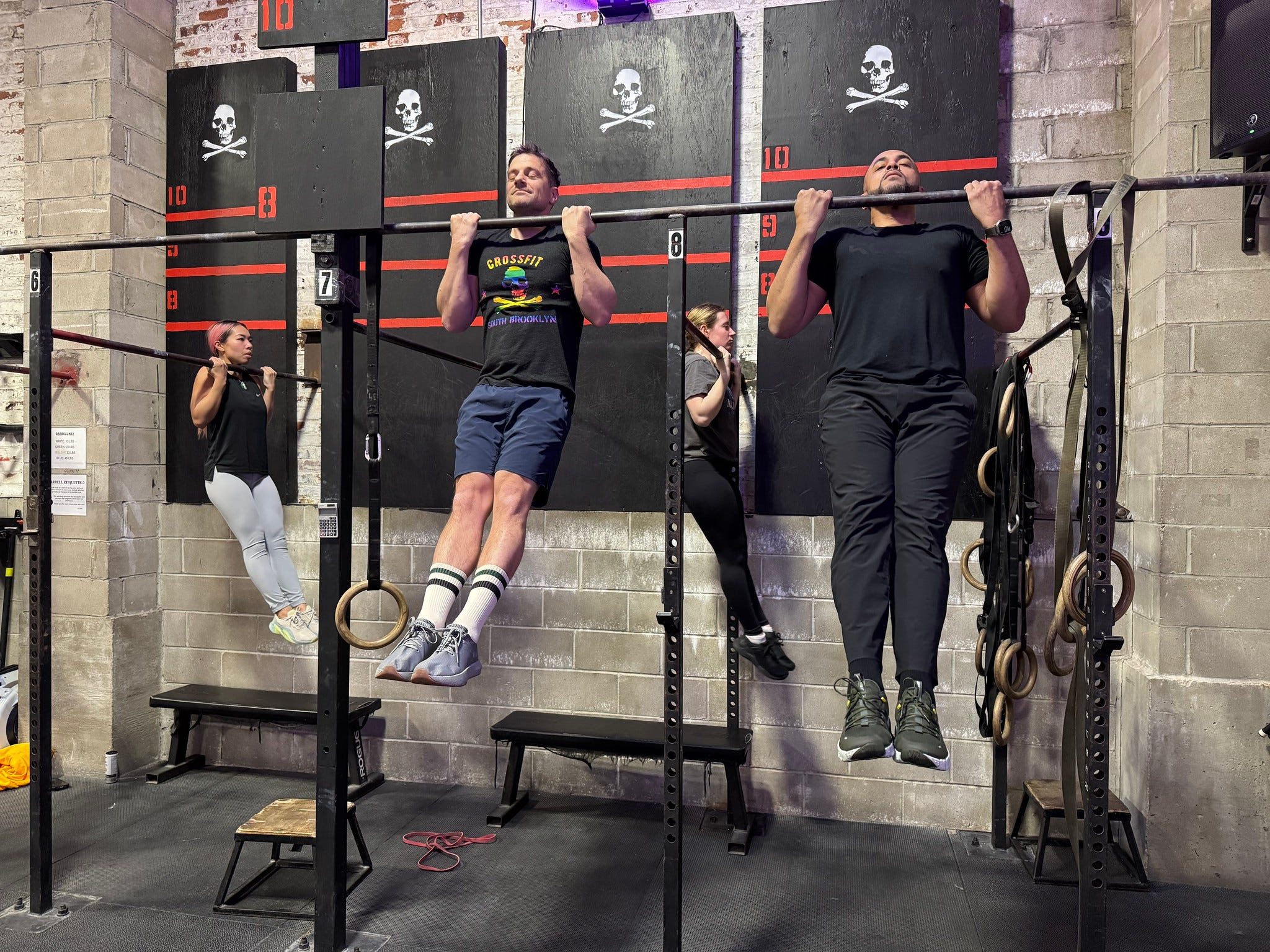
Pete: For David, community isn’t just a side effect — it’s a core offering.
David: Community is built every single day.
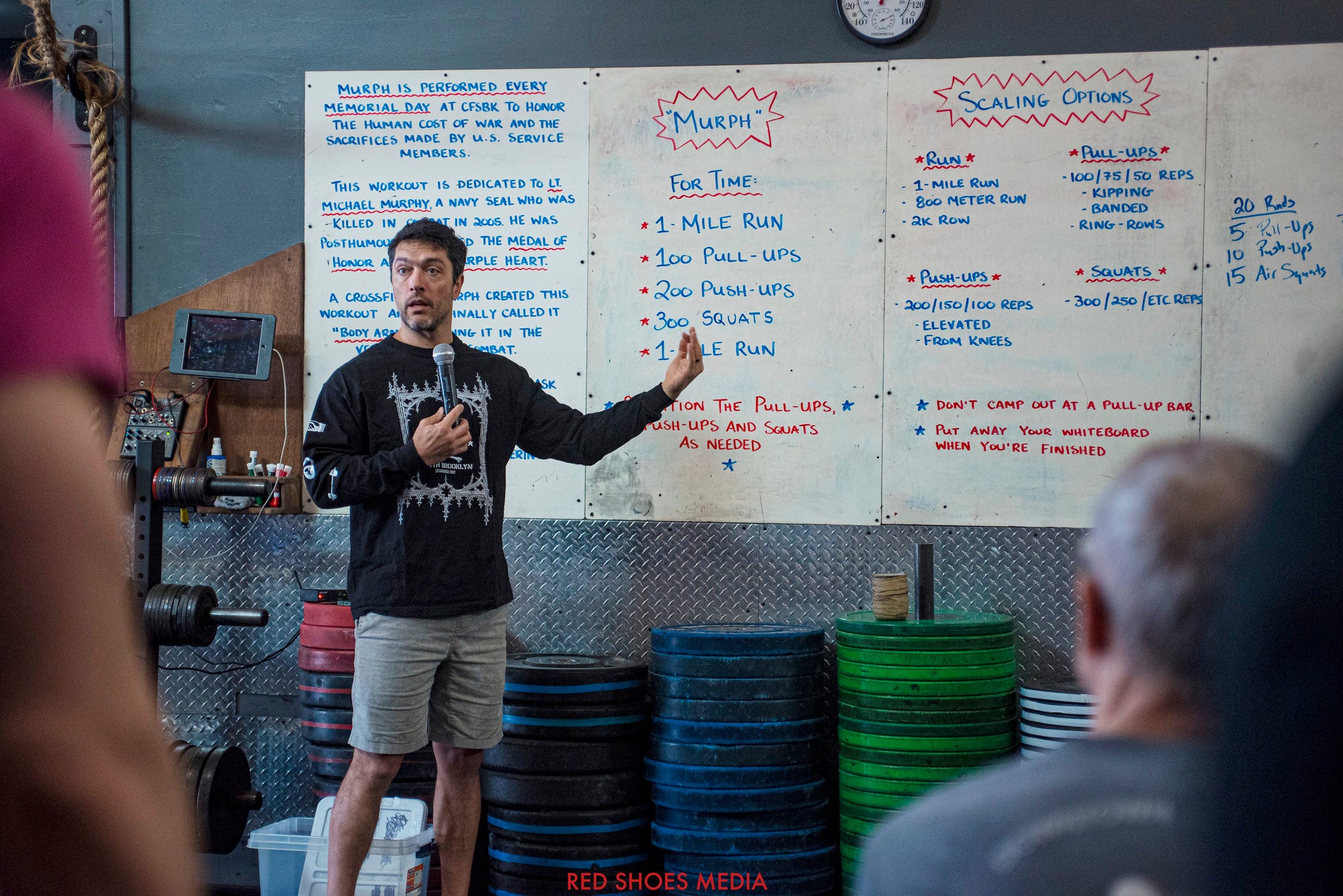
So for example, one of the things that we do in about 80% of our classes is we start with a question of the day. So while we’re warming up with arm circles, it might be: “What was your first job?” So we’ll go around and somebody’s like: “Oh, I was a paper boy.” “I was this.” “I was that.” And you do that every single day for 18 years, and you learn a lot about people. Not a day goes by without someone saying “Oh, I went to that college too!” or “Oh, I’m watching that show!” You just create opportunities. I call them little seeds — seeds for connection. You’re constantly planting little seeds for how people can relate to each other, how they connect.
We might do a little partner warmup where we’re going to run a lap and do squats and in that time I want them to find out: “What’d you go to school for?” and “Would you go for something different now?”—something that peels a little bit deeper into that person.
You want to give people permission to be open. I used to take gymnastics classes here in New York City for a while. Same thing — we’re all together, it’s an equalizer, you have this opportunity for community. But the coach never facilitated conversation. If someone happened to be extroverted, they might go out of their way and start talking to people. But for the most part, people kept to themselves — because they weren’t given that permission or that allowance.
The other thing the question of the day does: Within that hour, just for one moment, it puts a spotlight on that person. So you’re never just anonymous. At least for one second, you have the opportunity to have the spotlight on you. And the cumulative total is: People really get to know each other. They let their guards down. They realize this is a social place.
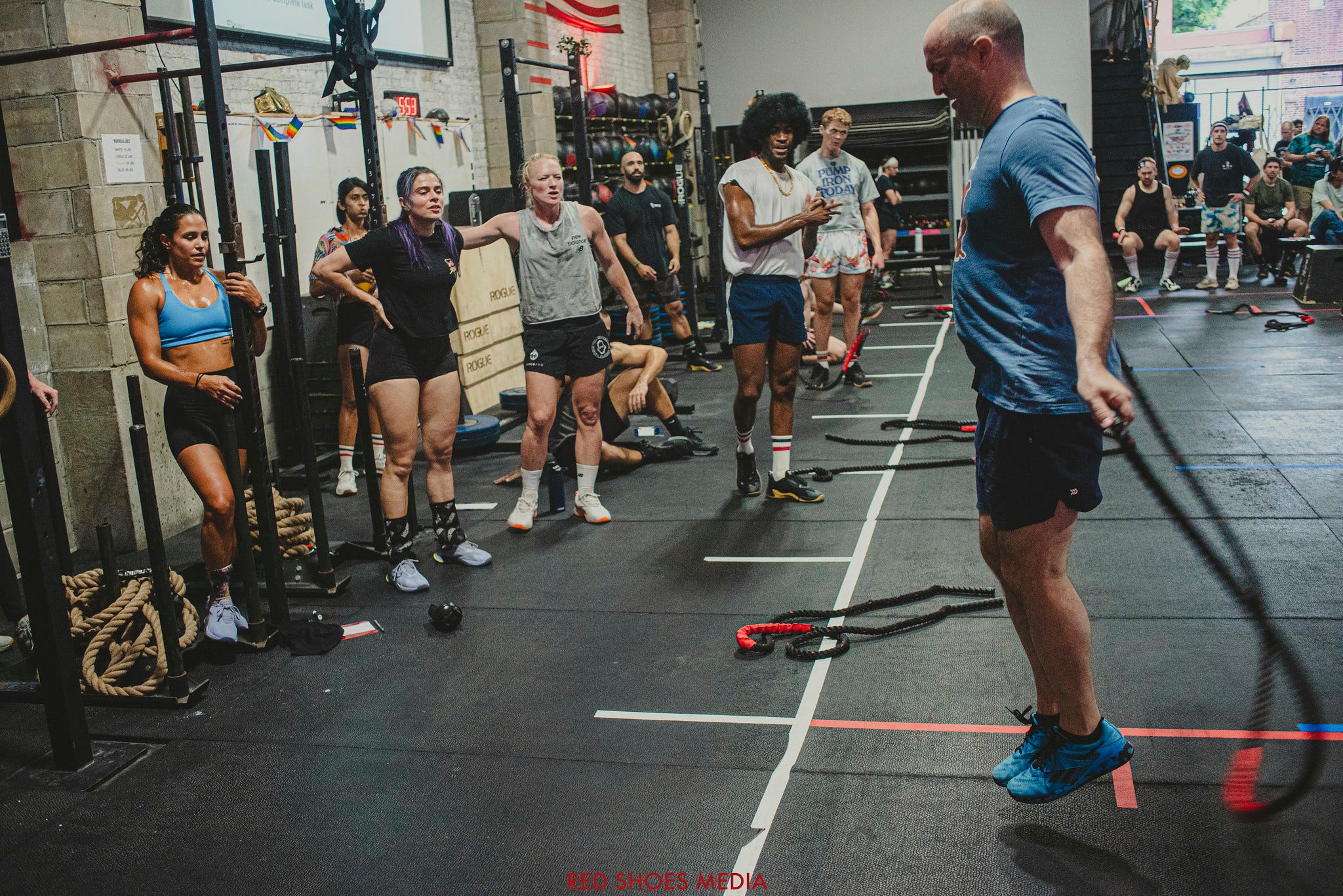
Rebecca: At CrossFit South Brooklyn, they take the art of invitation seriously, too.
David: People talk about this a lot — “Oh, my gym, my program—it’s inclusive.” Maybe—but for a lot of groups you need signaling that they are welcome there or that there is a space for them there. Because from outside, a program like ours can be very intimidating. Are they gonna be sympathetic to my needs?
We have a lot of people from all walks of life in our general program, but we also have additional programs.
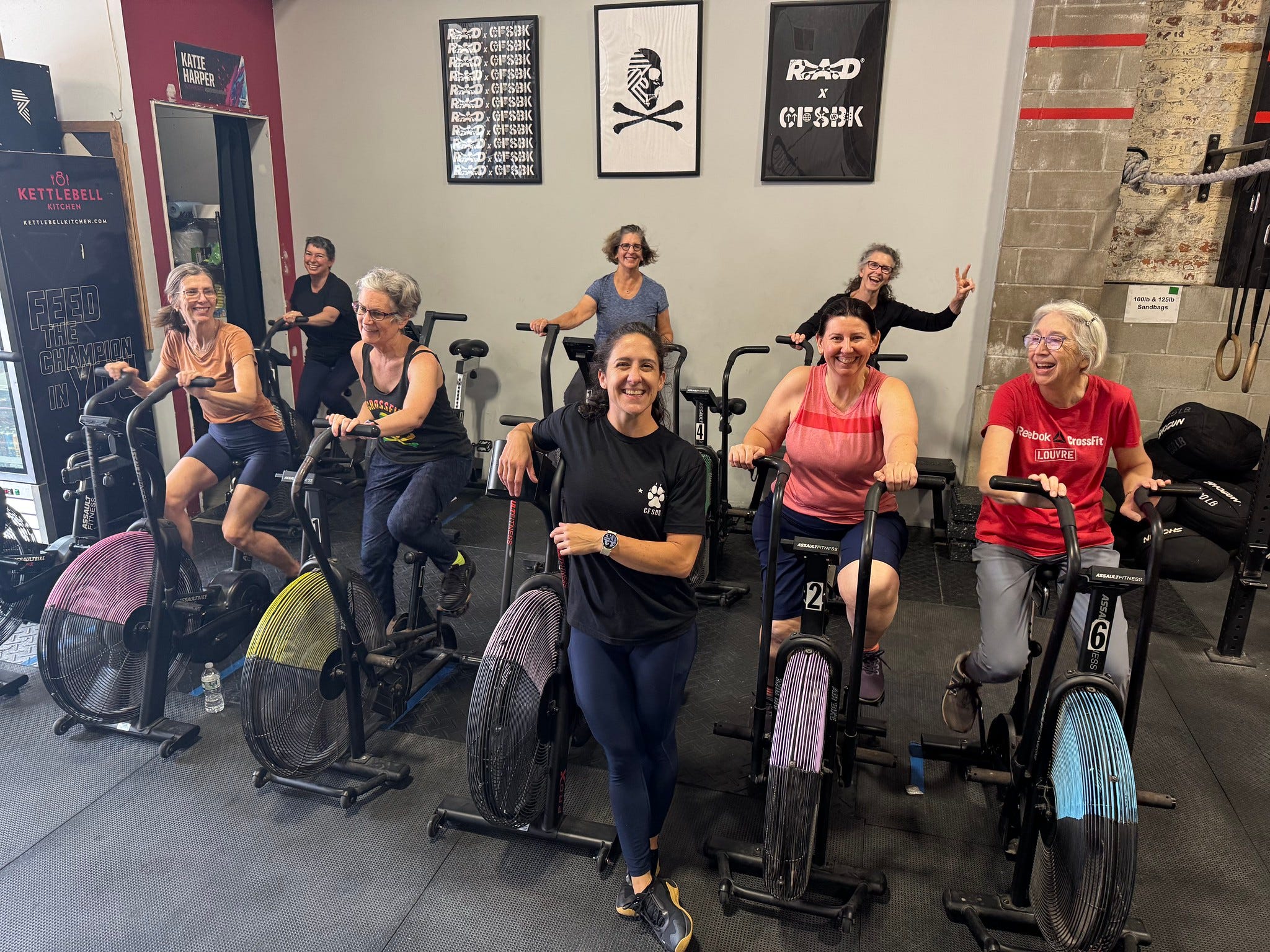
We have Fit 55 — for people who might think, “I’d be interested in this kind of training, but I might be too old. I don’t want to be the only X or Y.” This gives those people license—like that puts that sign on the door that says: Hey you—specifically you—we have a thing for you. And for some people that’s kinda their first taste and they end up going to the group classes as well. But that forms its own community — these people are in a different stage of life.
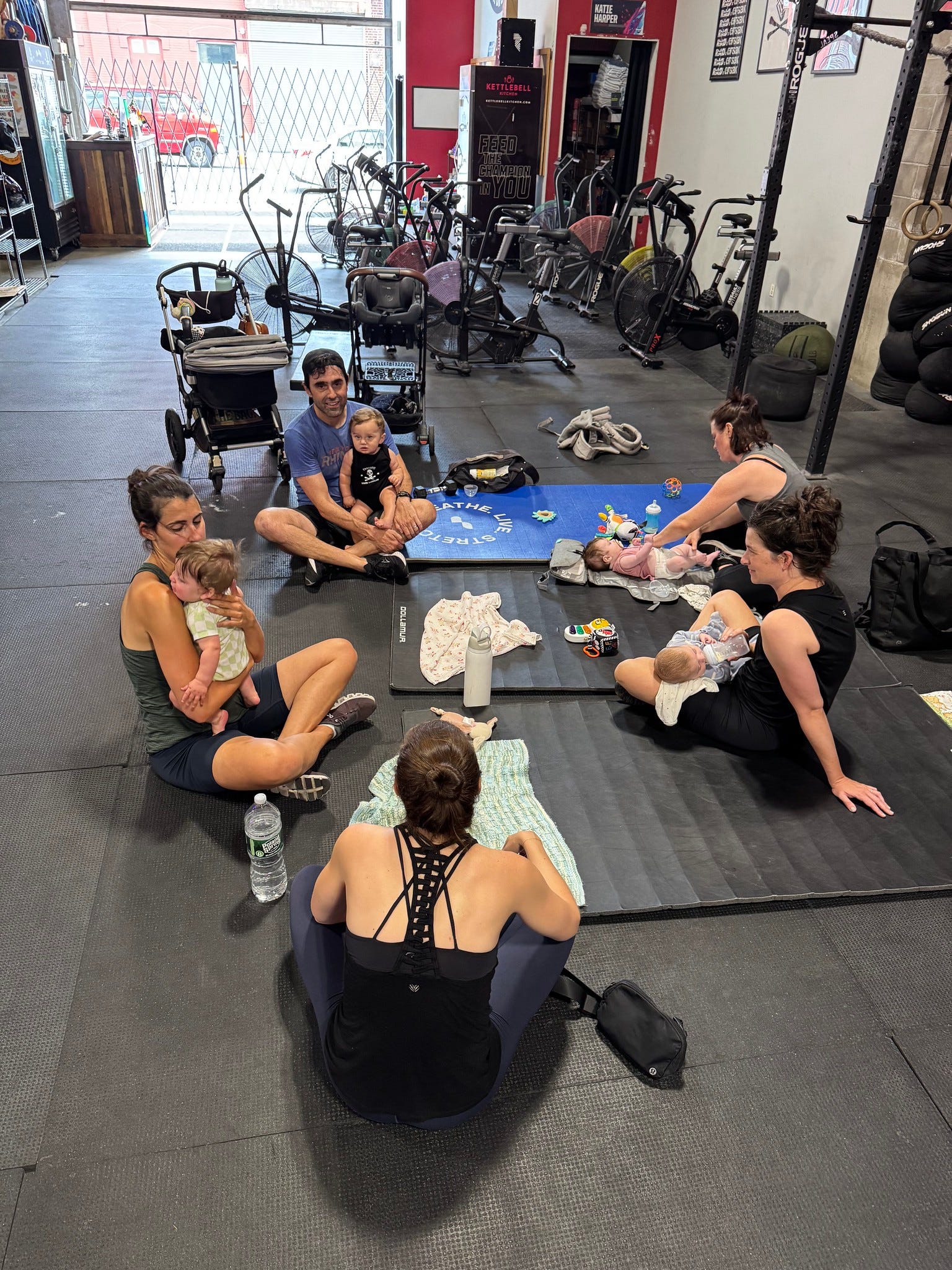
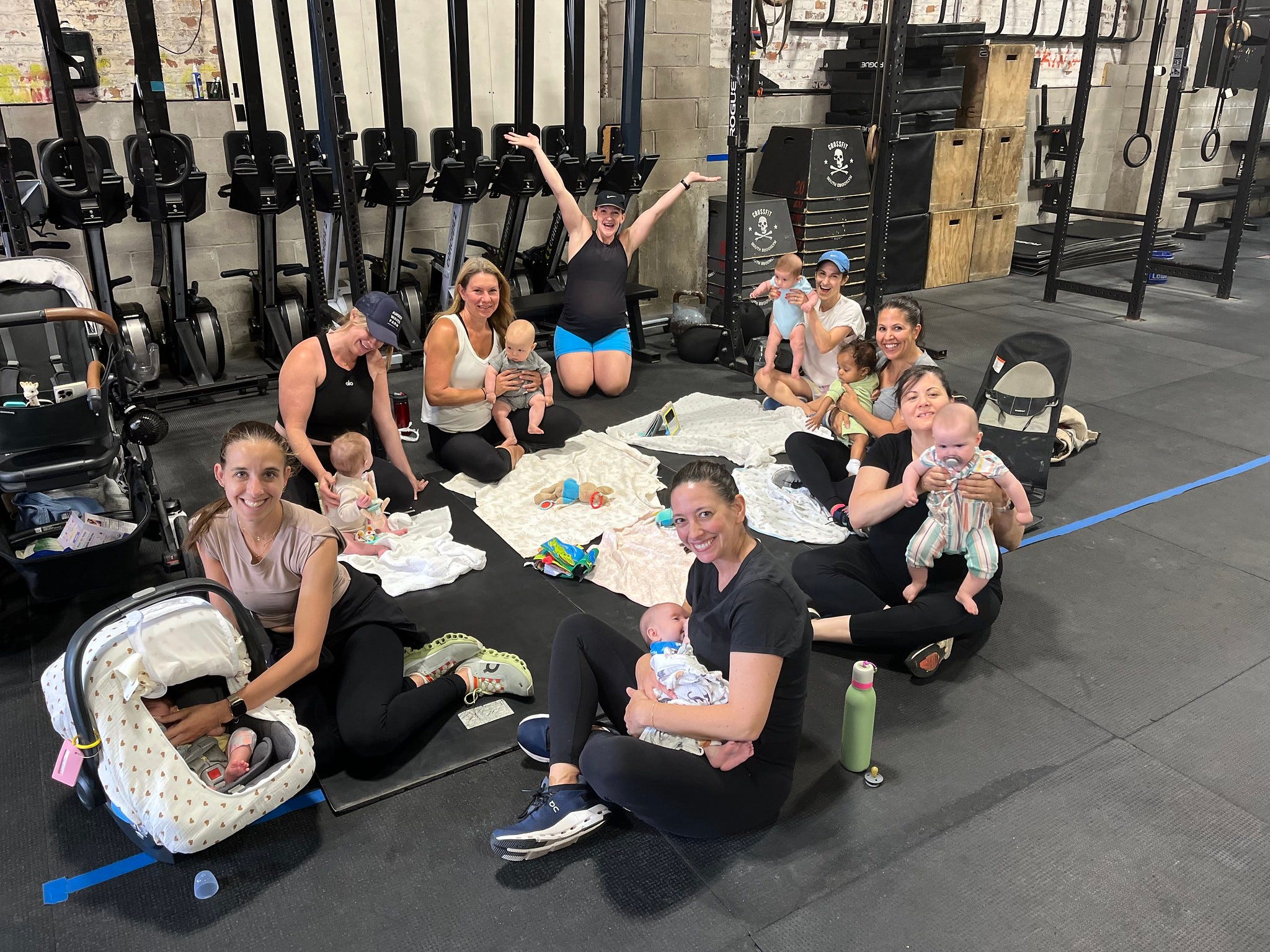
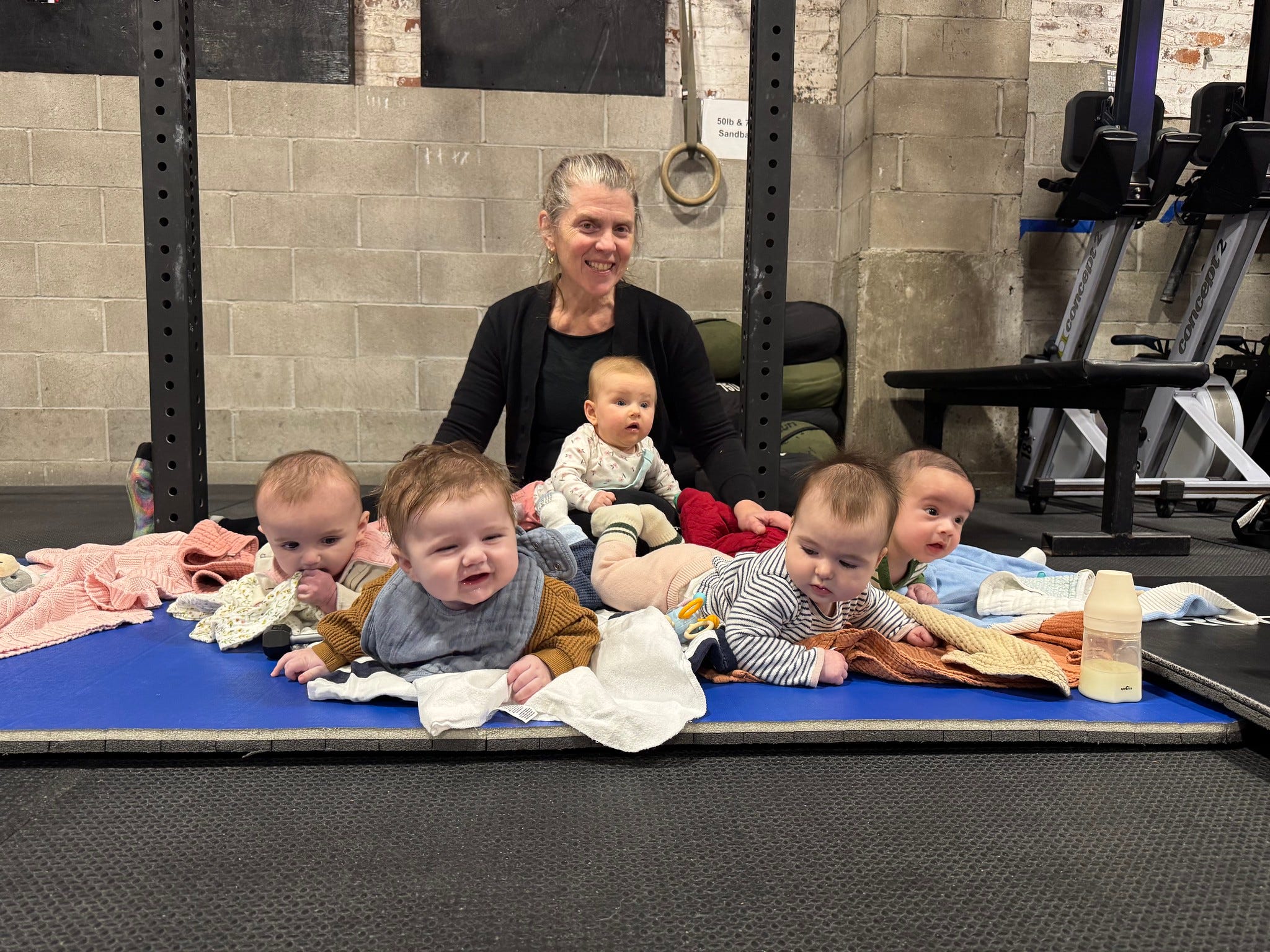
We have Diapers and Dumbbells, a postpartum class where we offer in-house childcare. So you’ll have the coach, and then we’ll have what we call a baby wrangler.
We have The Phoenix — a free CrossFit class for anybody who is 48 hours sober. People coming through recovery of substance abuse need that outlet—that something else. So you have accountability, you have community, you have this positive experience that you’re going to. And again, everybody else in that room is struggling through some sort of substance abuse history in their past.
Prior to having this program, one of our coaches, Brett — who is many years sober — said, “Hey, I’d love to do a class for our sober members, just to highlight them and give them an opportunity to come together.” I said sure. And the class was massive—I had no idea how many of these people that I saw every single day had their sobriety as such a huge part of their history and their identity—and how important the gym and community was for them.
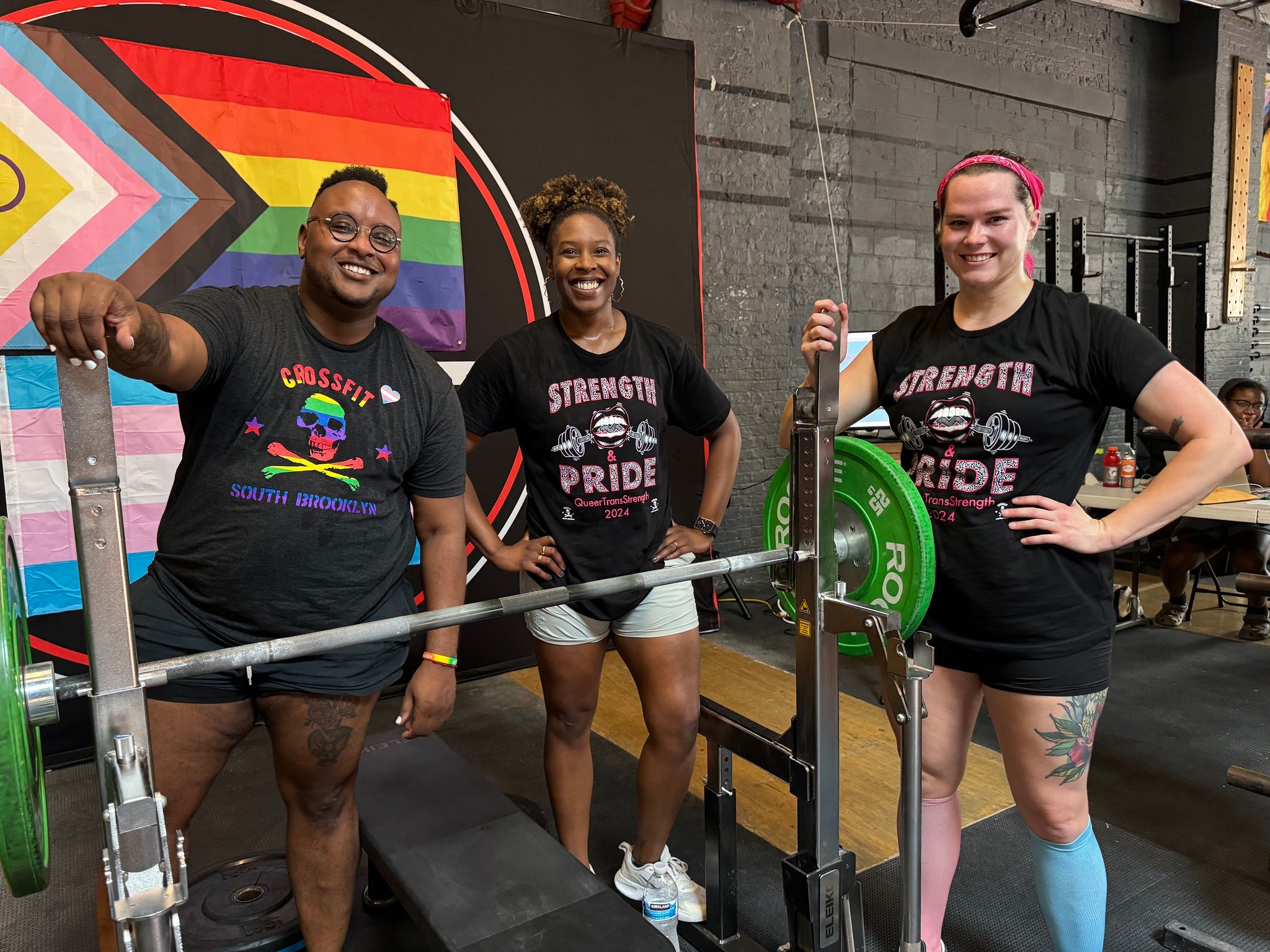
We also host Queer Trans Strength NYC — it’s all queer and trans strength coaches, so it’s a place for queer and trans people to learn weightlifting, barbell training, strength training. Again, especially in gyms, it can be a place where they feel like: “I don’t fit into this kind of space. This has always been not for me.” But again, you create those avenues, and everybody else here is going to have a similar background to you in some capacity. It just gives people that freedom to walk through the doors.
Vulnerability is a really big part of what we do. Most people are very vulnerable coming into our gym. You have a handful of people who are ready to go — ready to pop their shirt off, throw big weights around — but most people walk into the space kind of scared shitless: “Oh my God, everyone knows each other. They’re lifting all these weights. There’s all this new jargon that everyone knows? What’s the etiquette? What’s this? What’s that?”
I didn’t do a lot of team sports growing up because I was intimidated. I thought: “That’s not for me.” But I started to get into weightlifting and things like that and thought: “Oh, this actually is for me.” And that really changed my perception of myself.
That through line has carried through the gym — recognizing people’s vulnerability, recognizing that most people are scared coming into this thing. And then you have to proactively meet, greet, and make those people feel safe and welcome.
The founder of CrossFit, Greg Glassman, has this line which I’ve always felt to be true: In the beginning, it’s transformative. And then it’s definitive. So you have a transformative experience: You come in, maybe you just want to work out, get better — but you start to get stronger and realize: Wow, this is actually important to me. I did things I could never do before. And then it gets to the point where it’s like: This is part of who I am. I am someone who is fit and strong. That’s what we want to get to — a transformative and then a definitive experience, and this is part of your identity now.
Pete: And the gym is sprouting communities that go beyond physical fitness.
David: We have a men’s group. Coach Brett had really positive experiences in men’s groups and said, “I just want an opportunity for men to connect with their emotions, be able to talk and be vulnerable.” A lot of times these things come up organically.
We also have a coven. One of our coaches, Coach Clay, is a witch and she said, “I wanna do a coven.” It’s an opportunity for people to understand how a magical practice and ritual can enrich your own life. They’ve done sound baths, they do creative activities, and they talk about different things — ways they can channel their own energy, however they want to express it.
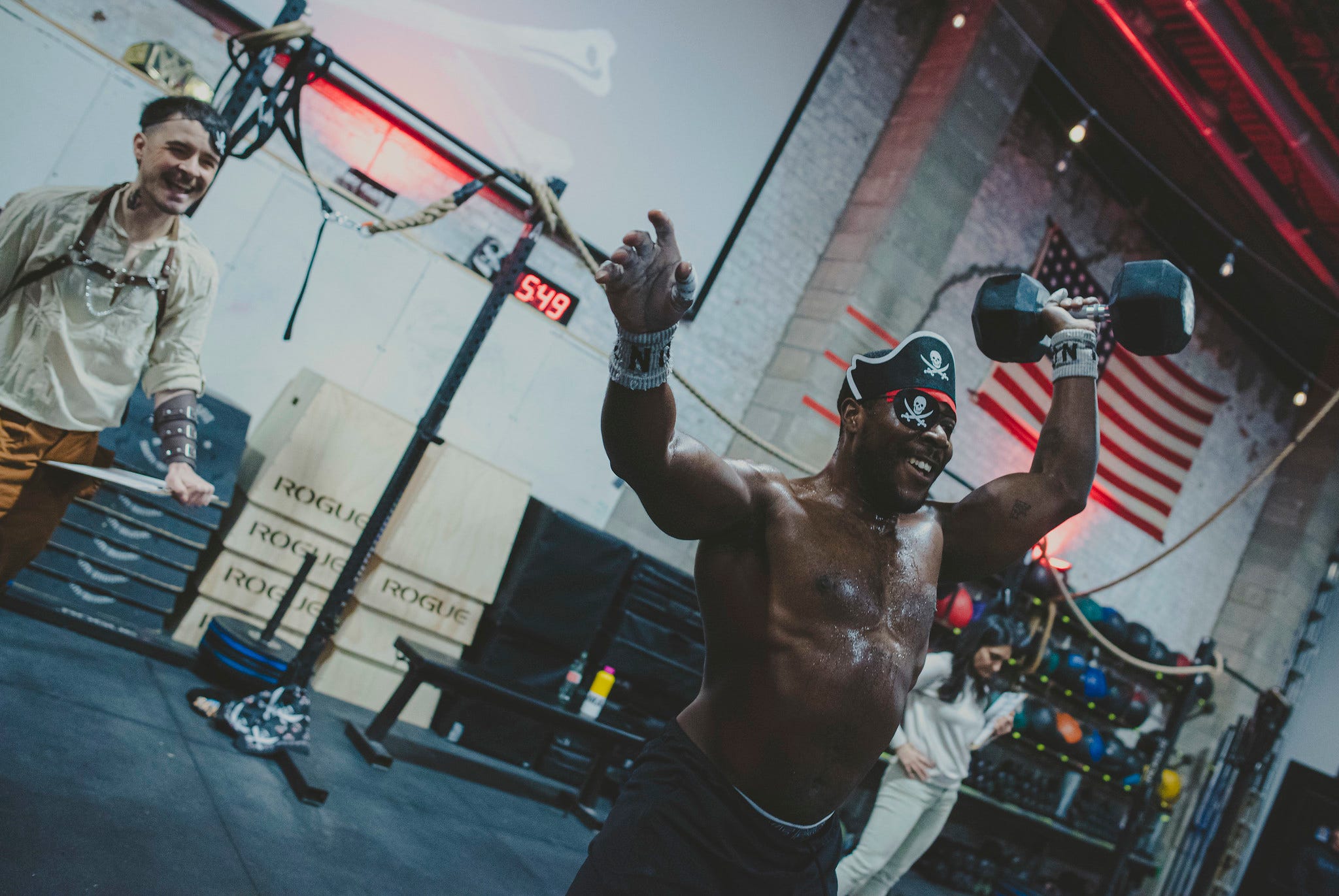
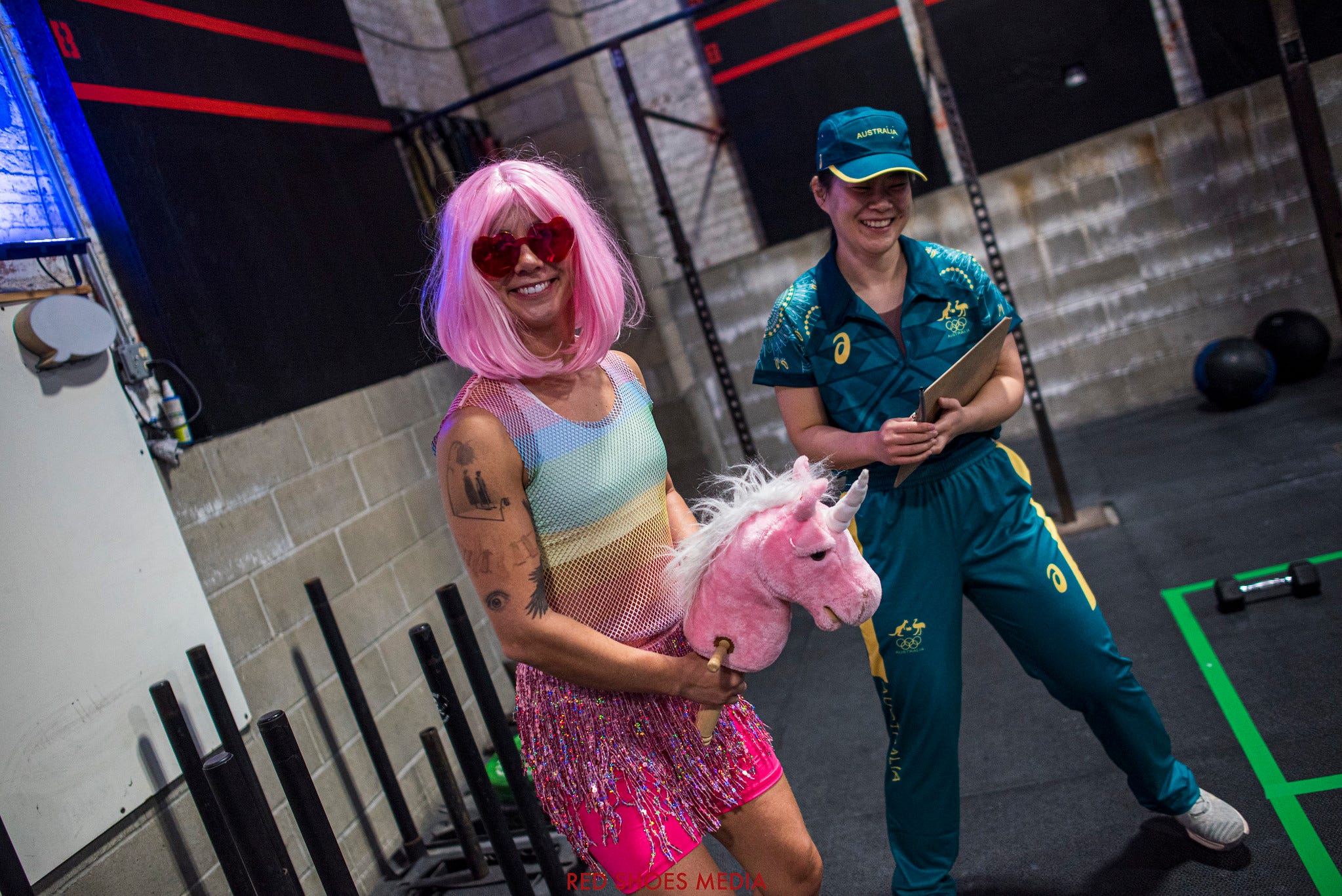
We do a lot of events too. We have a comedy show as well — one of our members, Maria, is a comedian, and she came to us with this idea: “It would be cool to do a standup show here.” And I said: “Why not? Let’s do it.”
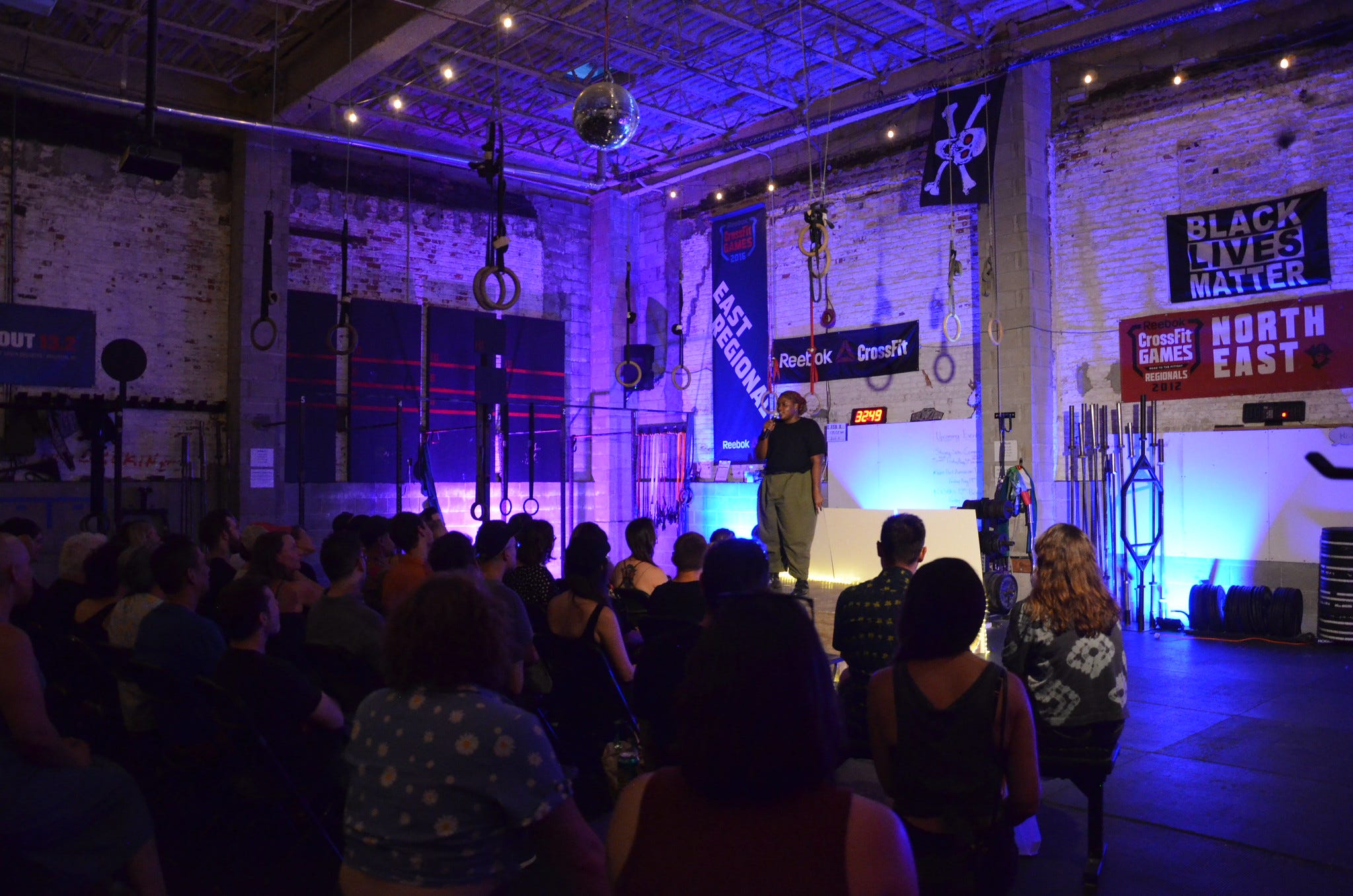
This is the 11th year we’ve done our art show. Again: organically through having conversations, like “We have a lot of arts, we have a lot of talented people here, we should showcase that somehow.” So it was just an idea. I’m like, “Well let’s do it and see what happens. The worst case, you know, we waste a night.” But the art show was a huge success. This year we have about thirty different artists showing their work. A hundred percent of the people involved are gym members. Some are professional artists, some are hobbyists who have never shown their work before — and this is their first opportunity to actually show it, which is really exciting. We’ll have live jazz, an aerial performance, live tattooing, and one of our members who opened a clay studio will have a clay wheel there. So there’s a lot of opportunities, again, for people to connect.
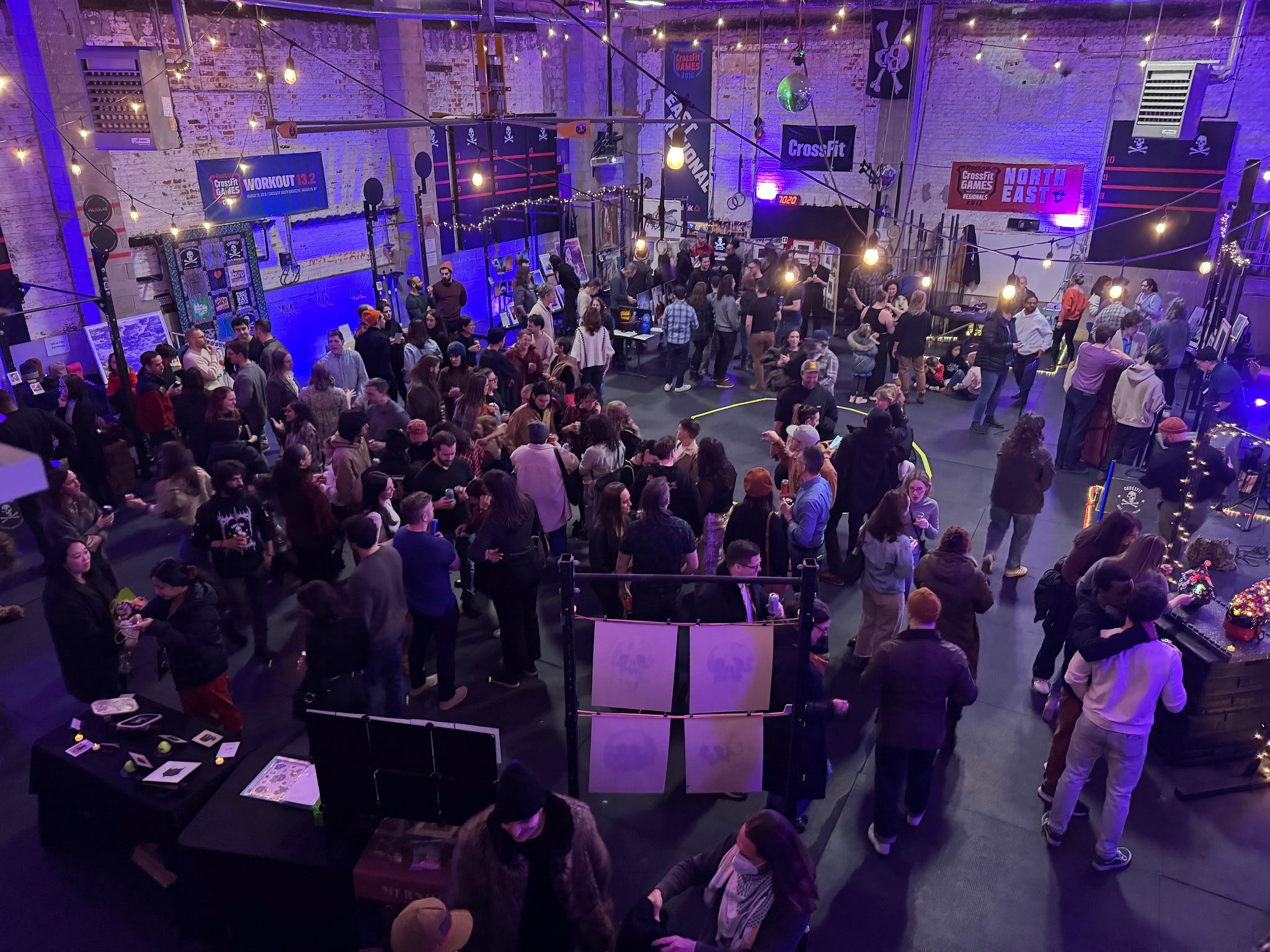
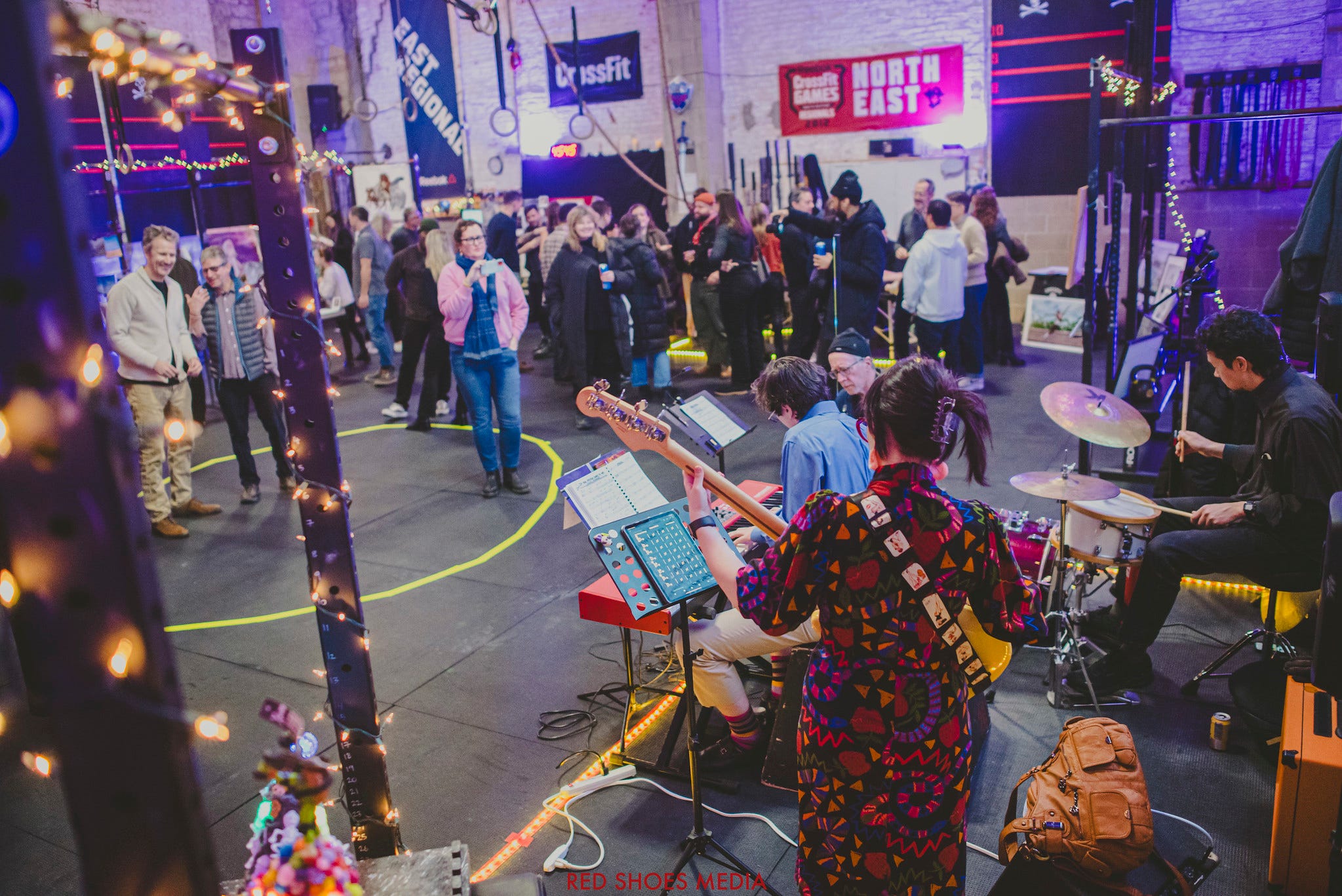
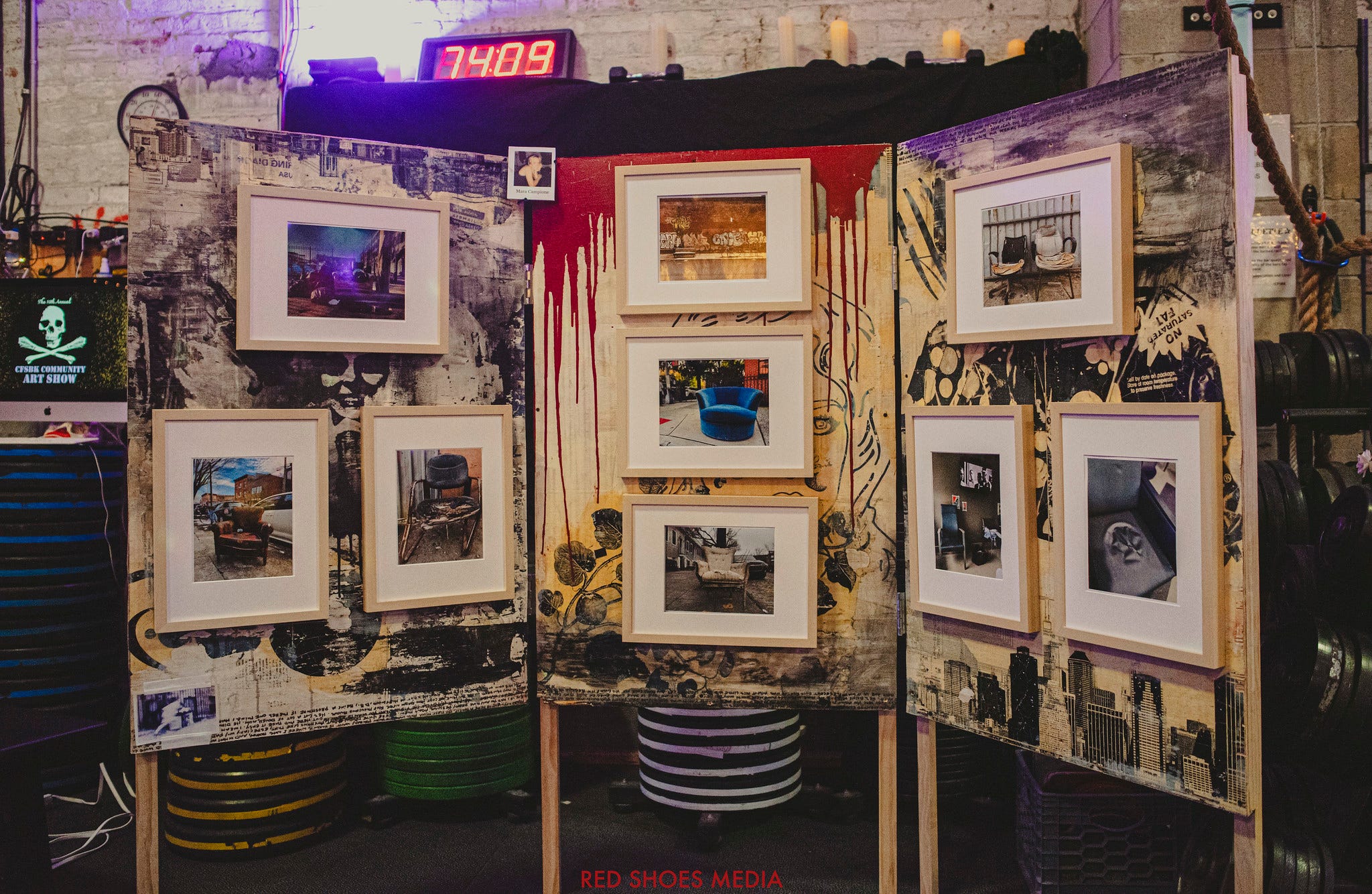
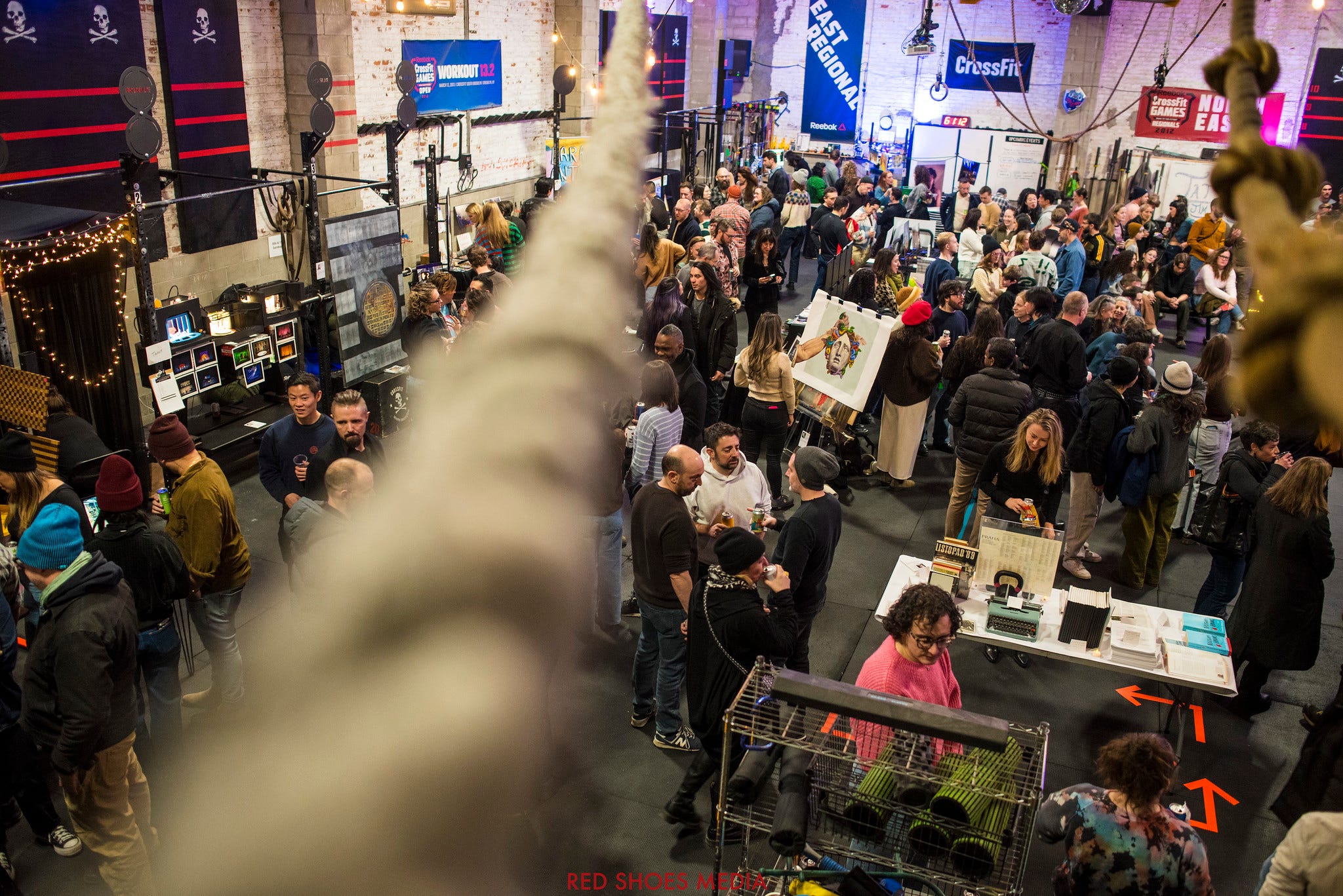
All of these things further people’s connection with each other. They get a little bit deeper than just: “Oh, this is the person I work out with. Oh, you’re actually a really skilled artisan in this thing.” You just create opportunities for people to be seen.
Pete: And the CrossFit South Brooklyn community is a great neighbor, as well.
David: We do a thing called Fight Gone Bad — that’s a big community event we’ve done every year since 2008. We’ve raised in total just over $520,000 for a variety of foundations—Brooklyn Community Foundation for many years, and most recently Brooklyn Community Housing Services. We wanted to focus more on our local community so we could actually have the people who run these organizations in our space, talking about the impact — and we can follow up and say: “The $40,000 you raised last year, this is where it went in Brooklyn.”
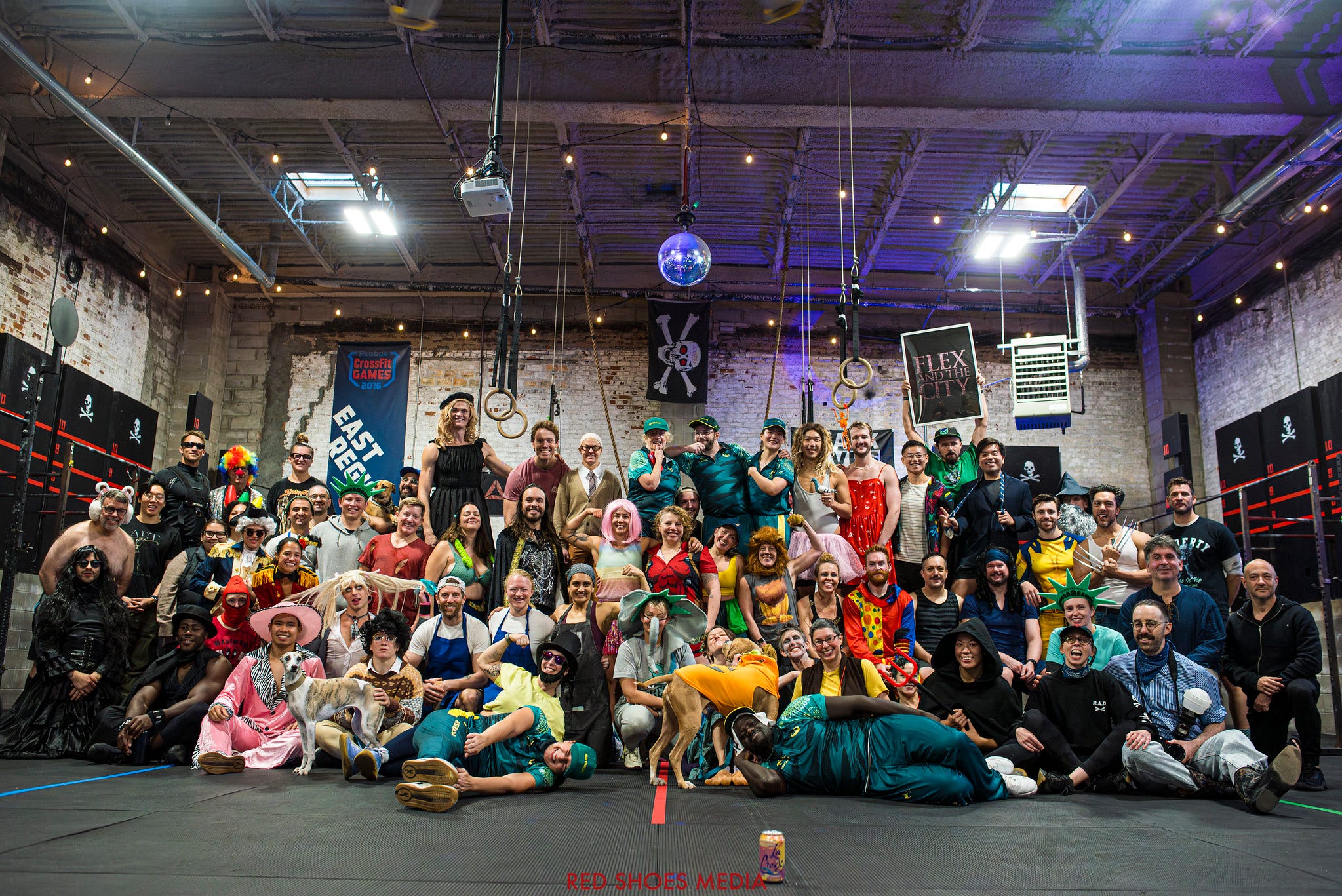
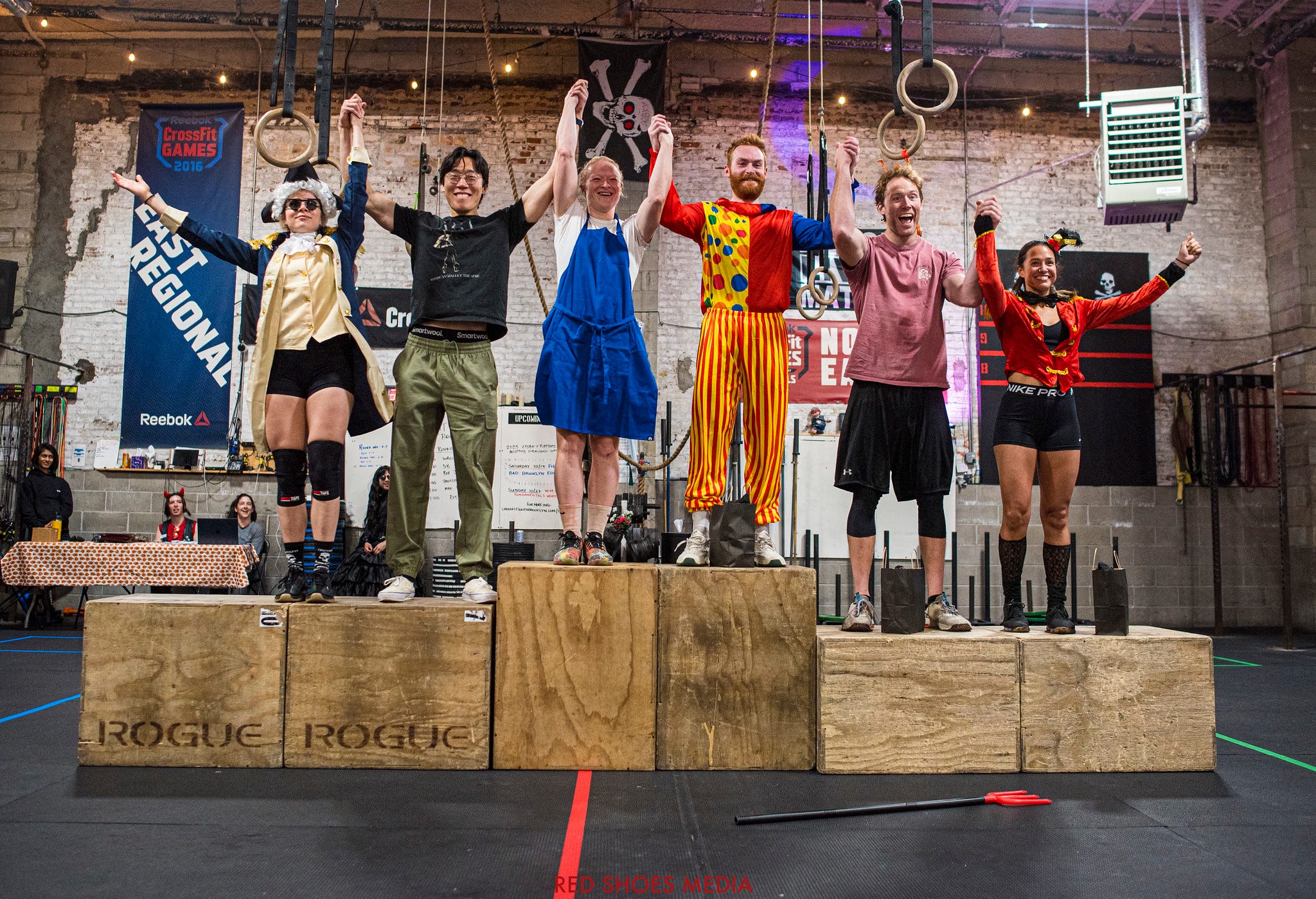
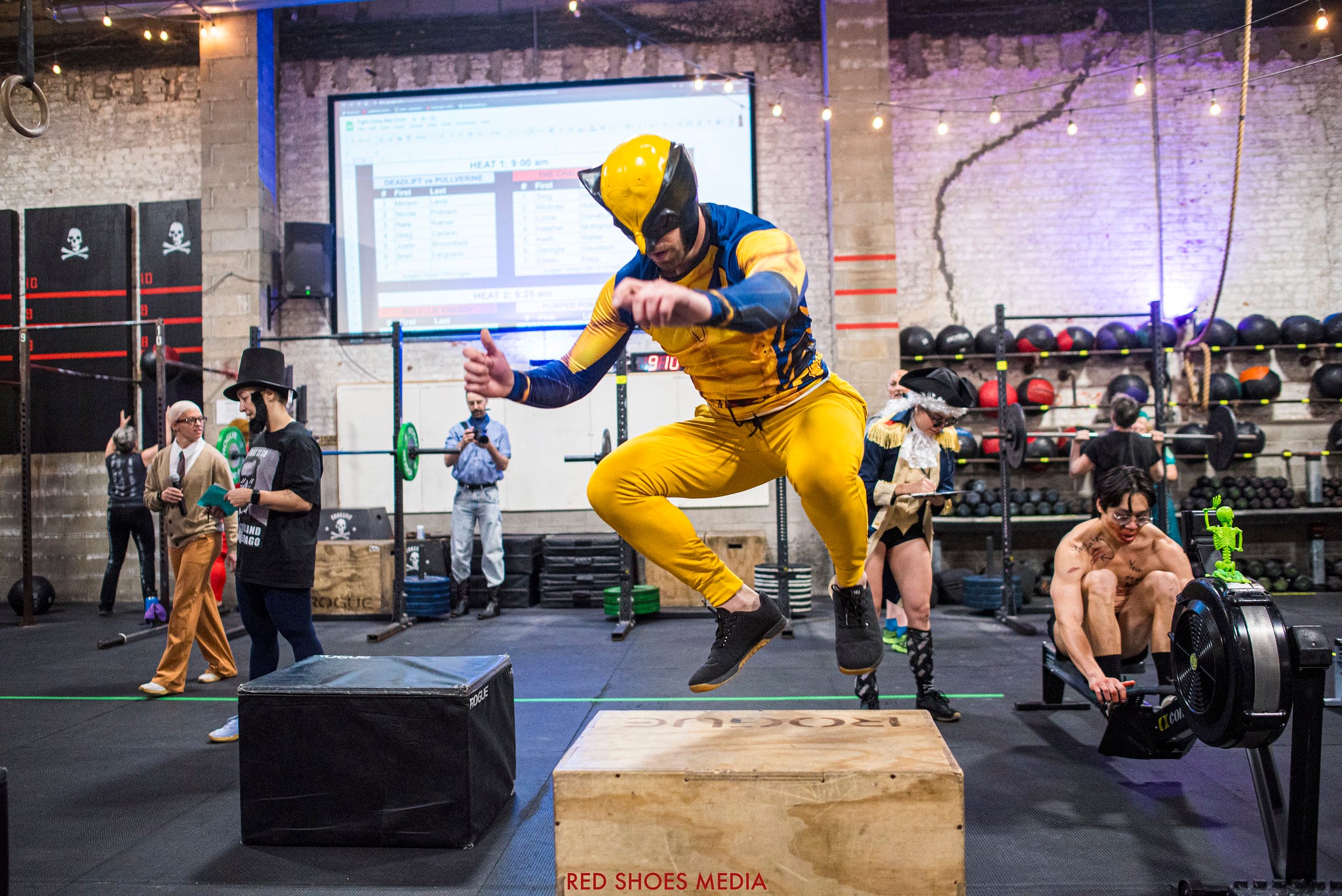
From 2016 to 2019, we did a thing called Iron Maidens Raw Open — a women’s-only powerlifting meet — and partnered with Grace Outreach, a Brooklyn organization, to develop a Stay Strong Scholarship. We were able to pay 70% of college tuition for women who were part of the Dreamers program or had been victims of predatory lending schemes. A lot of the women who were recipients of the program also trained for and competed in the powerlifting program as well.
We do a Stonewall pride workout that we wrote, and gyms all over the world do it. We do K9s for Warriors, helping service dogs for people dealing with PTSD coming back from deployment.
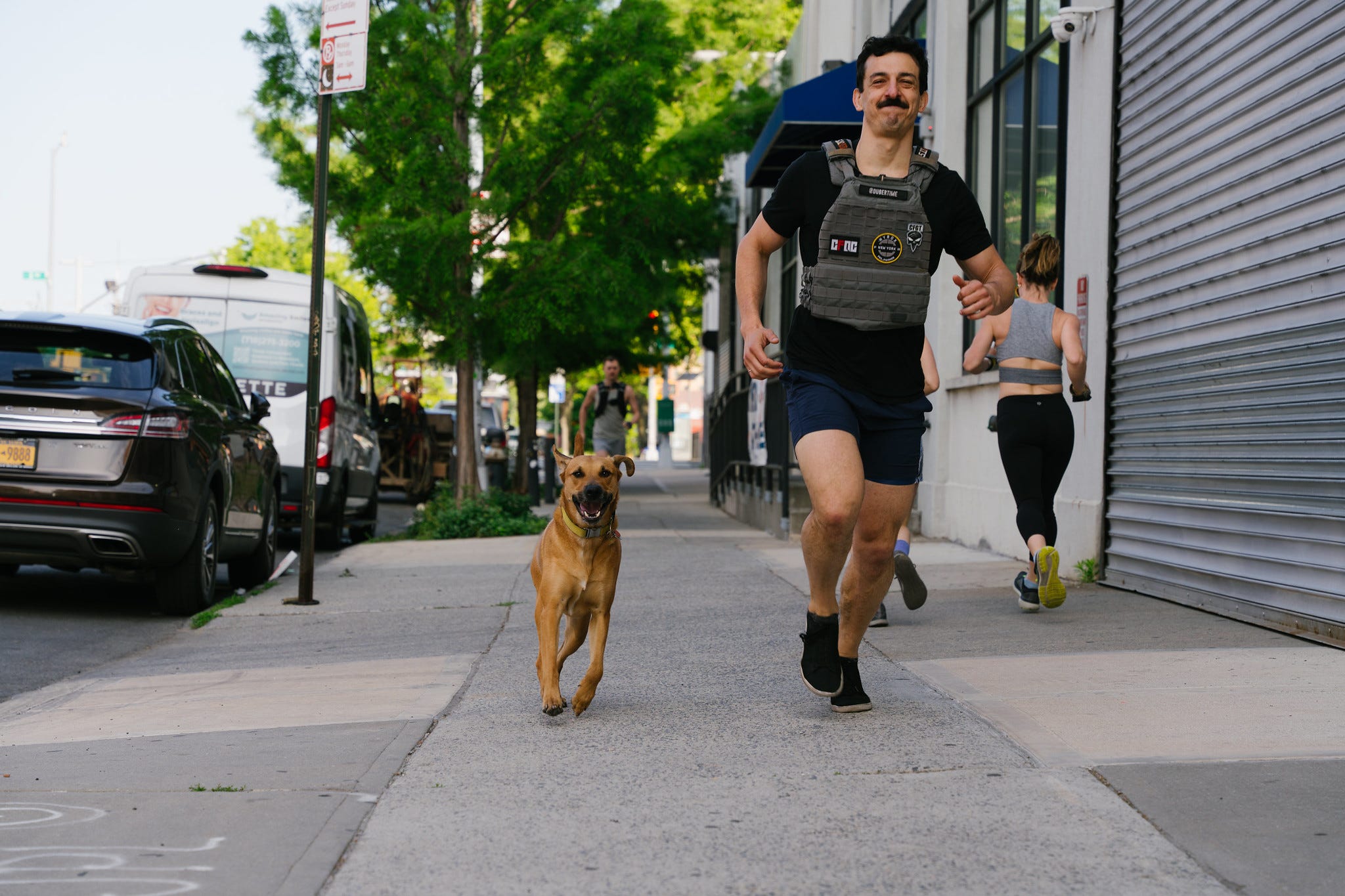
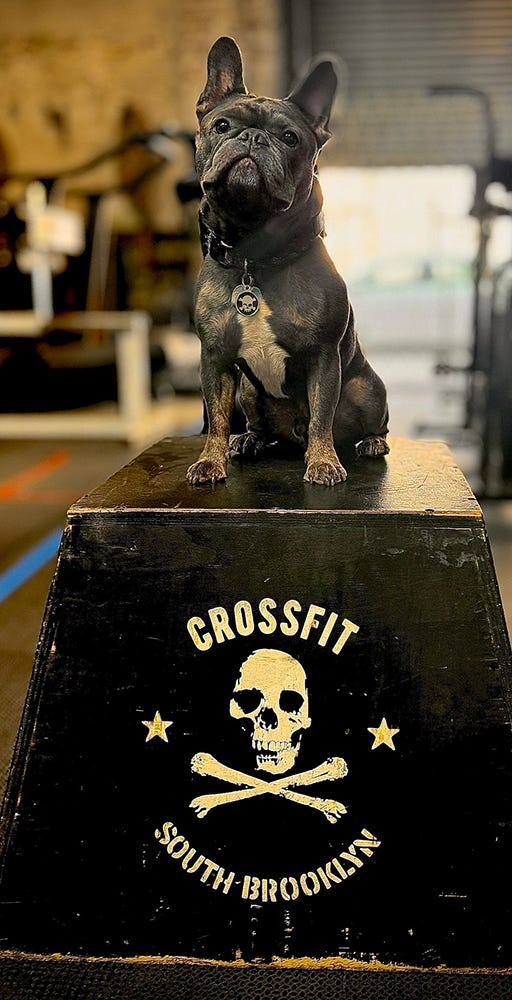
And we also do every year: The Dogs of CFSBK. So dogs are a huge part of our gym’s culture and atmosphere. We always have gym dogs around in the space. And one of our members runs a local dog rescue, so we do a calendar and all the funds go to that rescue. We’ve done dog adoption events in the gym and a lot of the dogs that members have now are through that.
Rebecca: And David’s seeing the fruits of 18 years of caring for this community.
David: We have two and three generations training under the same roof at our gym. Just a couple days ago I was on Instagram and three or four women from the gym — they spent New Year’s together in France. You see this all the time: People who just met and their social circles dramatically expanded because of the gym. People who have said: “This is my primary friend group. I’ve made so many lifelong friends through this.” They get married, they have kids.
And this is something I’ve heard a lot: people who move closer to the gym. “My lease went up, I need a new space” — and their only priority was staying close to the gym, or moving closer to the gym. Like that’s happened at least like 30 times over the years— someone’s like: This is such a vital part of my life.
Pete: The secret is not thinking in grand blueprints, but in daily cultivation.
David: I’ve never had a plan. My plan was to do this thing and keep growing it, keep building it, keep nurturing it. I think of it like a garden: Every day we come in, we tend the field, we trim the weeds, we water the plants, and do what we can—and a lot of it will come gradually.
Again, this is a CrossFit thing from the founder Greg Glassman: trying to do all the right things for all the right people for all the right reasons. That’s a really big part of our ethos.
All the right things: We want to promote health, community, fitness, connection — and have a little fun with it, and be weird as well.
All the right people are the people who are willing to walk through our doors. I don’t ever advertise. I don’t talk to non-members on our social media. We’re always just reflecting back to our own members what we’re doing.
I always say: I don’t want to be thirsty — I want to be sticky. I don’t care about the people who are not members of my gym — but if you’re outside and you walk by, or you see us on social media, you should think: That looks fun, I want to be part of that. Look at what these people are doing. That looks interesting.
And for all the right reasons, it’s like: We want to help people. We want to build careers. We want to give people, you know, that anchor in life.
So I just want to keep doing it as long as I possibly can.
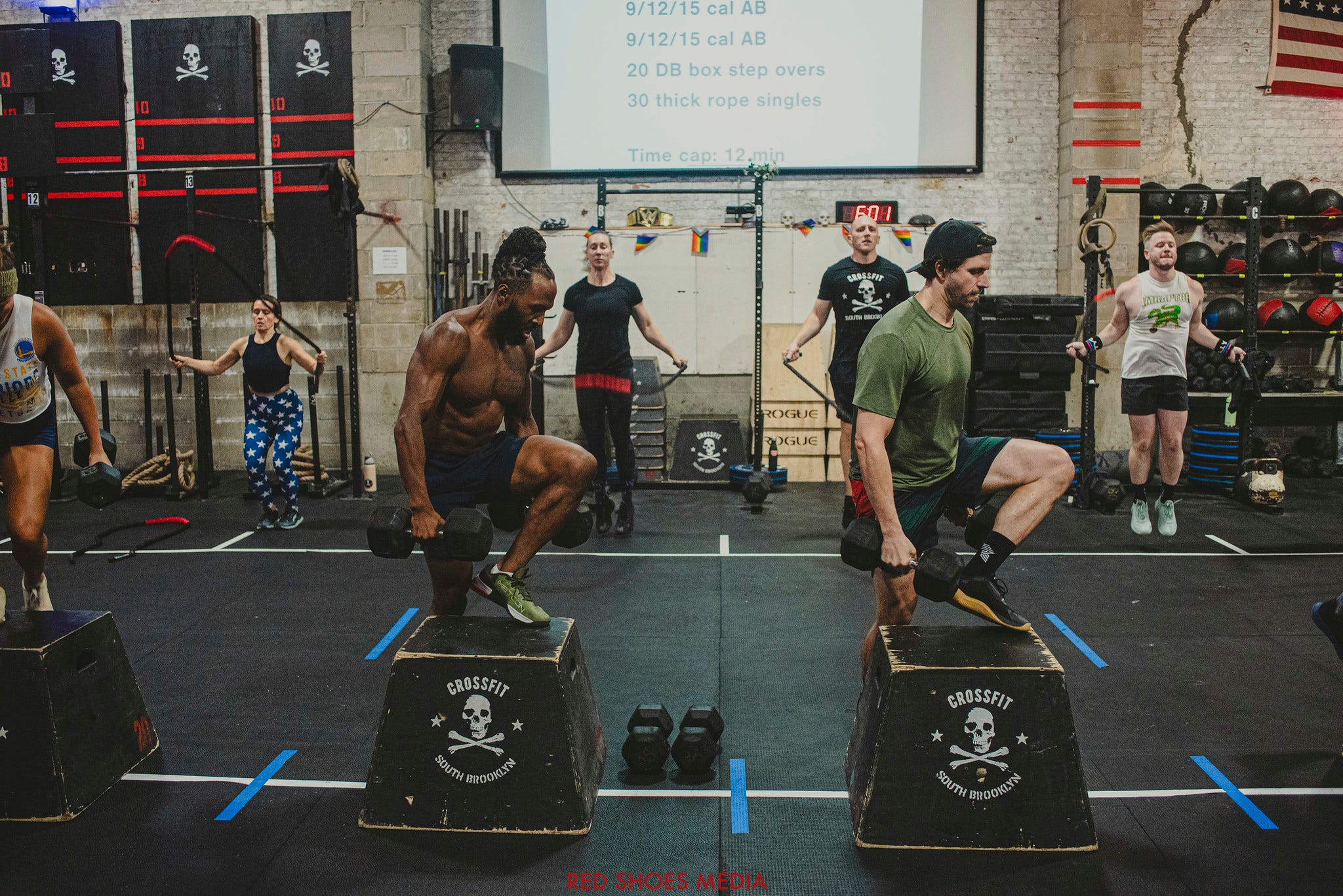
The three things I say are our recipes for success — it’s like: professional, kind, and fun.
So for us it’s a professional experience, we have professional facilities, our coaching staff is amazing. You come in and our facility looks great. It’s an experience that we’re proud of.
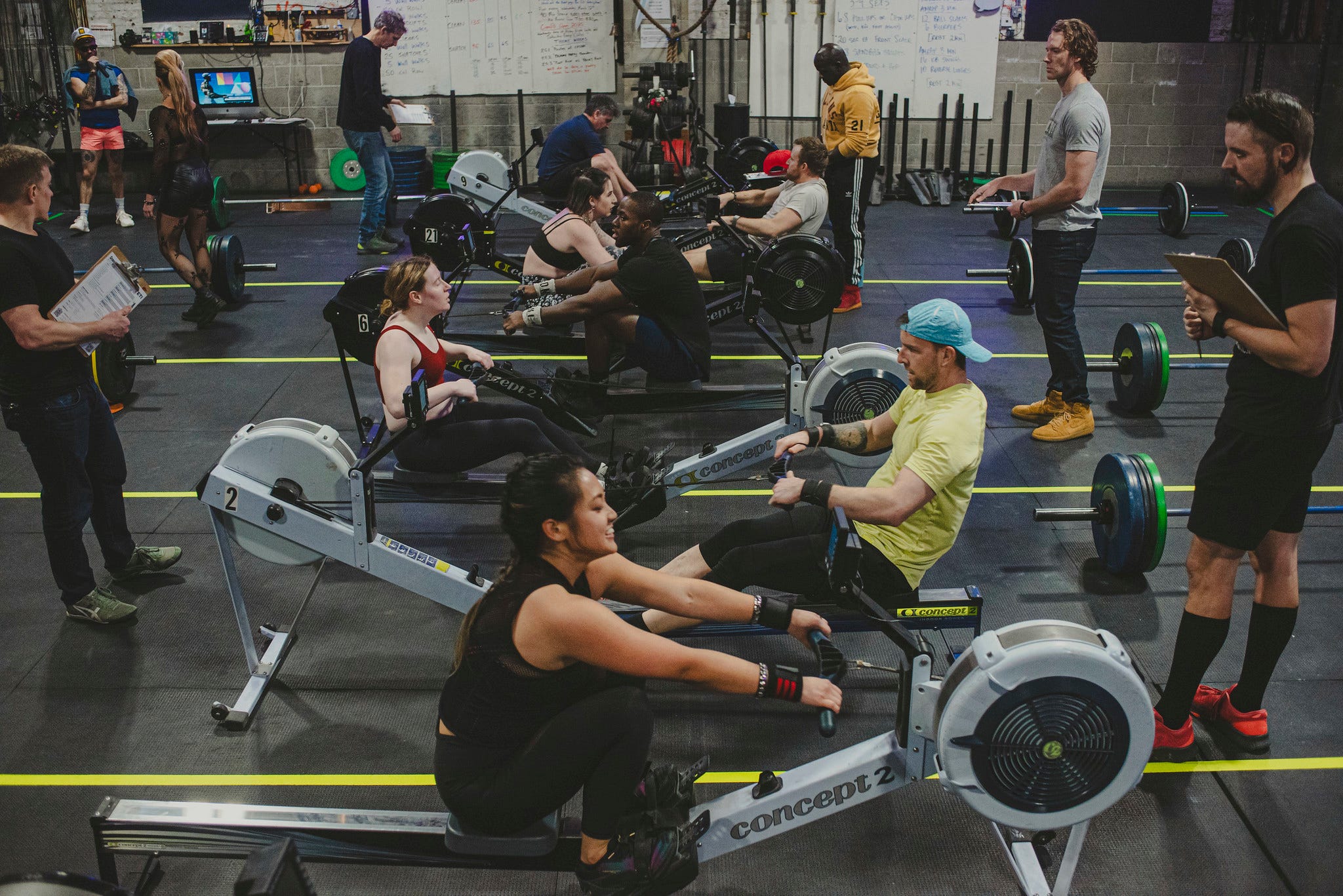
We want it to be kind. Kindness I know is the most powerful thing in the universe. If you extend kindness to people, it’s such a force multiplier. So many of those people who are nervous, who are scared, who want to be part of something — if they feel that kindness and warmth of your space, it’s like moths to a flame.
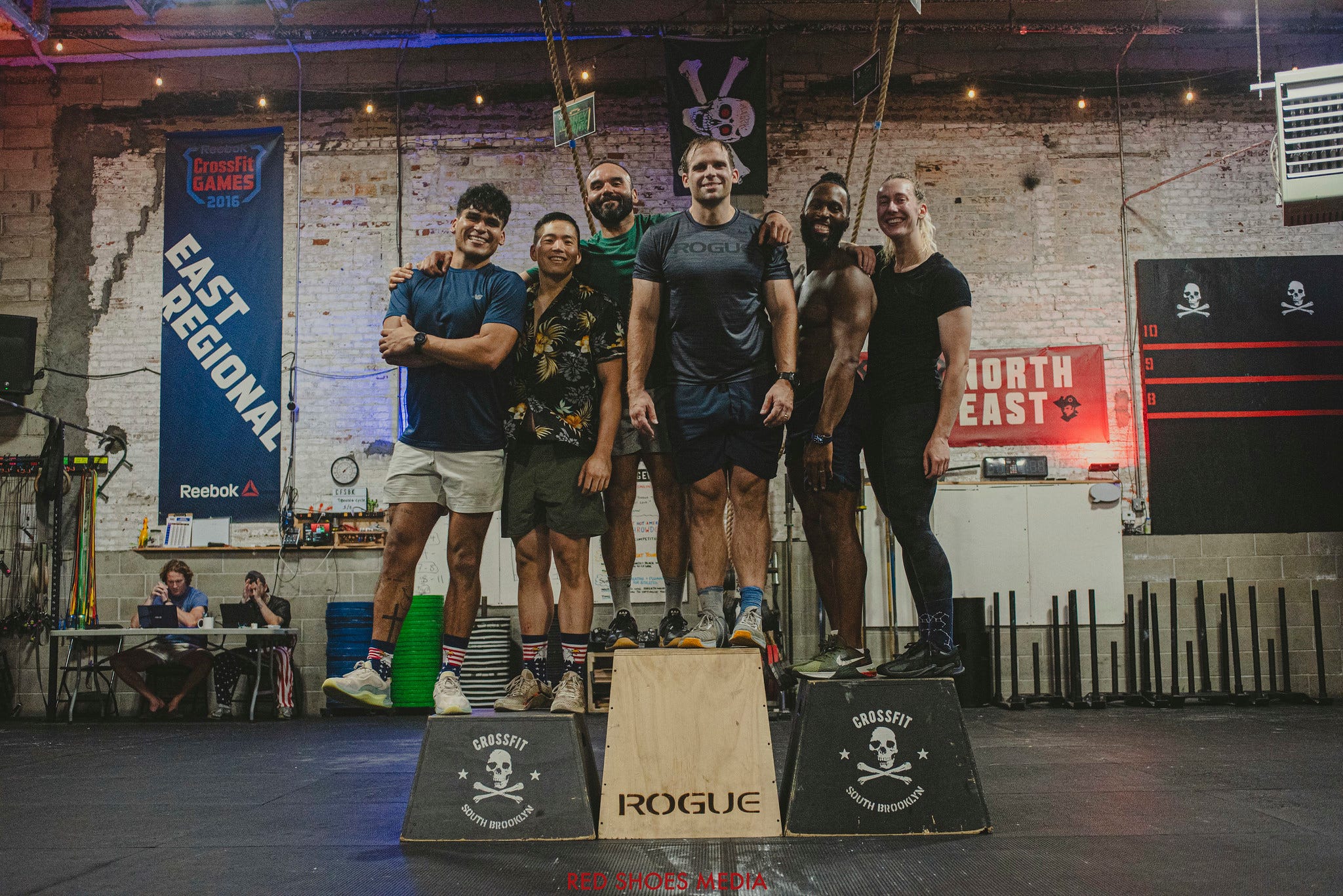
And then fun: it’s gotta be fun. You gotta be laughing, you know. Life is hard. A lot of people come to our gym and tell me: “This is my only hour of sanity — where I’m not on my phone, I’m not doom scrolling, I’m not stressed out about work. I come in here, I’m giving out high fives, I’m working out, I’m sweating, I’m meeting some of my favorite people.”
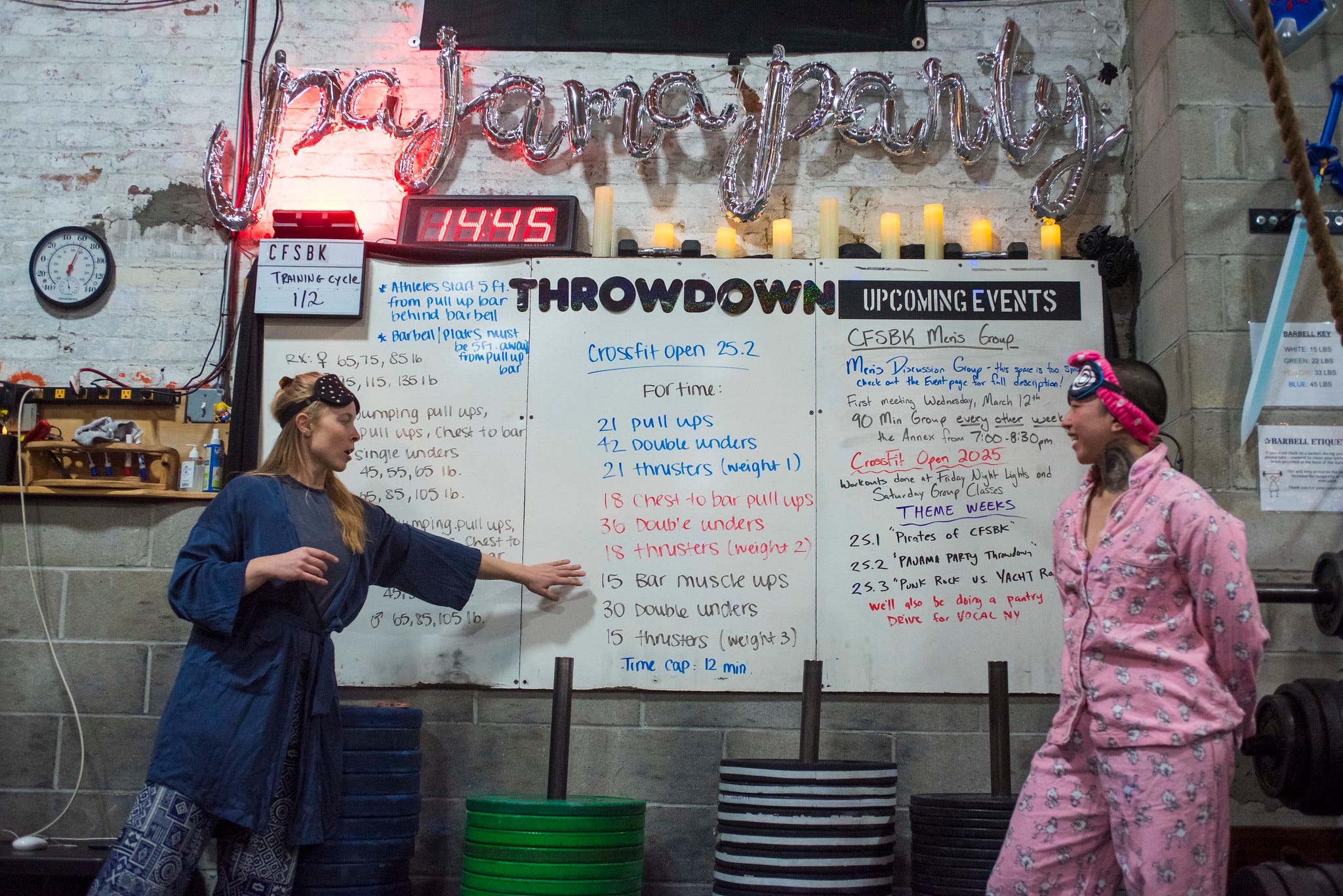
If you can find that, you can do it with a million different things.
💡 Learn more
⇛ Learn more about CrossFit South Brooklyn here
⇛ See a video from CFSBK’s recent art show here
⇛ Read more about CFSBK’s collaboration with The Phoenix program here
🍿 Bring JOIN OR DIE to your community
Want to host a JOIN OR DIE screening with your community? Let us know using the button below and we’ll get in touch with more information about how to host:
👕 We’ve got merch!
Check out our Join Up! tees here.

📣 Spread the message
Know someone who’d be moved to action by David’s story?
Inspired by someone who you think we should feature in a future WAYDATYCBDT who chose to do something that they could have done alone…together? Comment below!


